Scale Is Not a Strategy
Two companies do not become better because their revenues appear on one statement. The operating questions that determine whether scale creates advantage or only complexity.

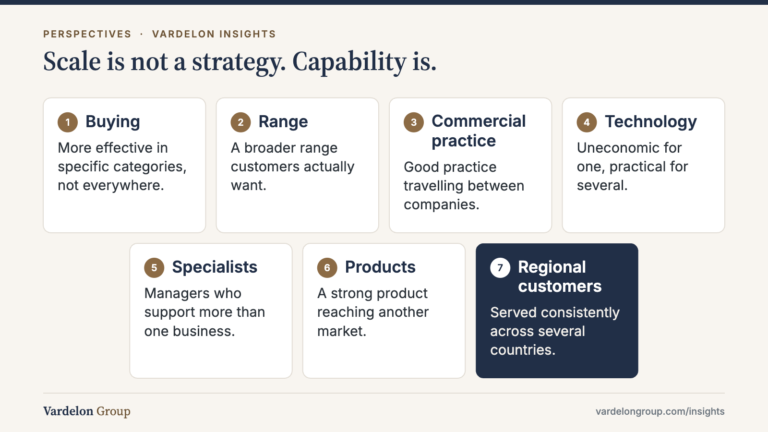
Two companies do not become better because their revenues appear on one statement. The operating questions that determine whether scale creates advantage or only complexity.
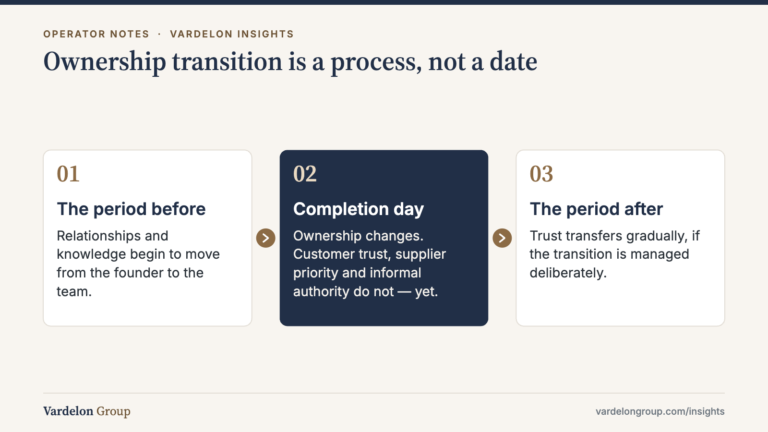
Completion day transfers shares. It does not transfer relationships, knowledge or authority. Why the useful work in a transition happens before and after, not on the day.
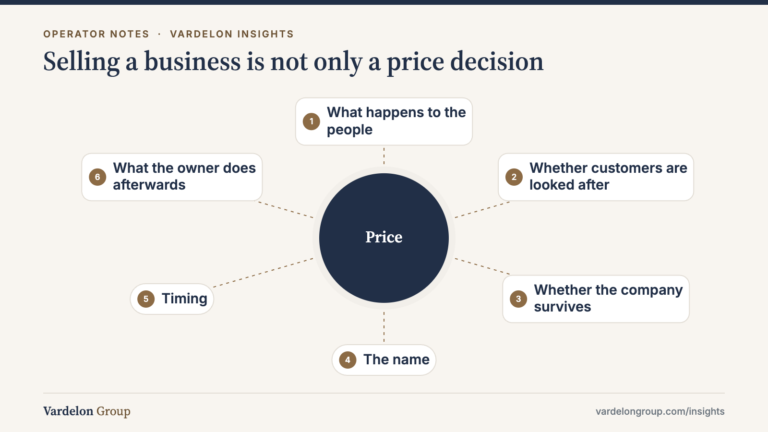
Owners optimise for several outcomes at once: continuity for staff, the survival of the brand, timing and personal reputation. Price is one variable among several.
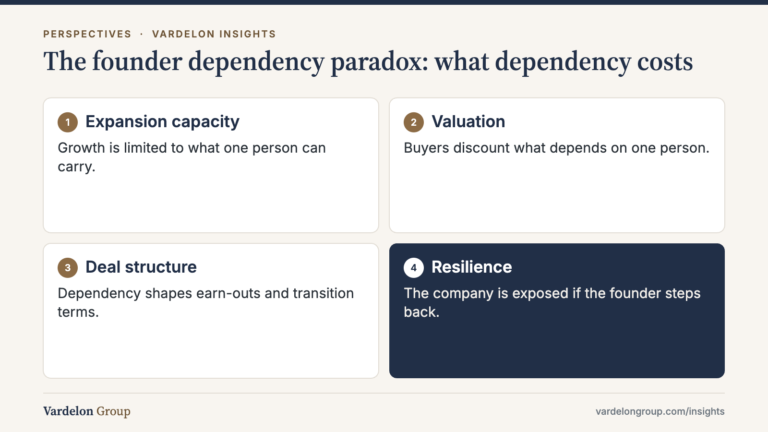
The founder is often the reason a business succeeded and the main risk to its value. How founder dependency is created, and what reduces it without weakening the company.
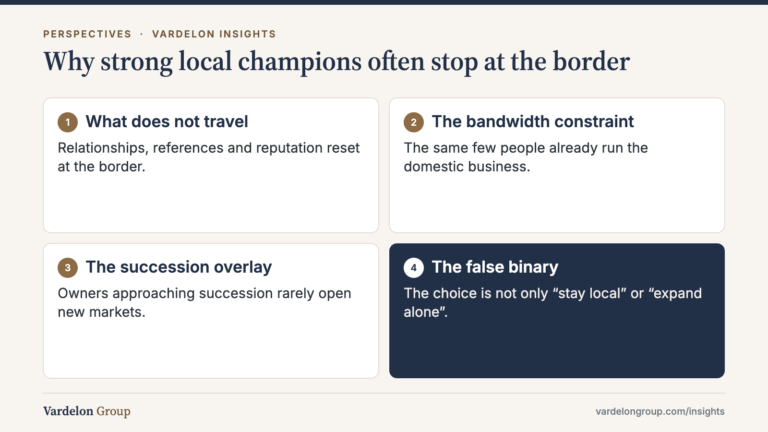
Strong domestic companies frequently stop at the border. The constraint is usually not ambition or capital, but management bandwidth and capabilities that do not travel.
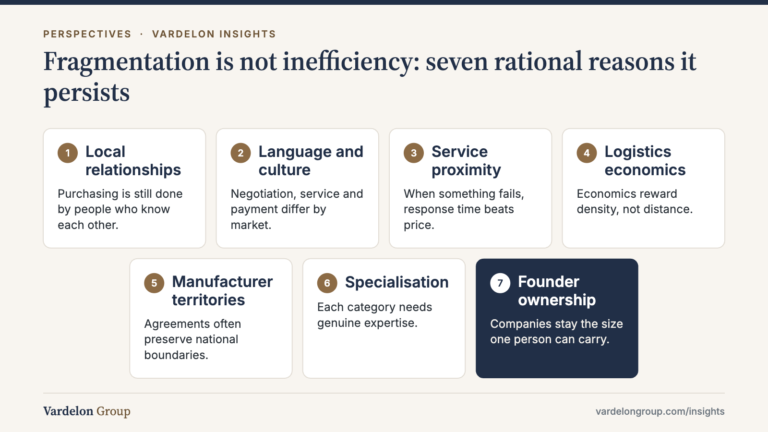
A market with no dominant player is not automatically waiting to be consolidated. Why CEE hospitality supply is fragmented for reasons that are largely rational.
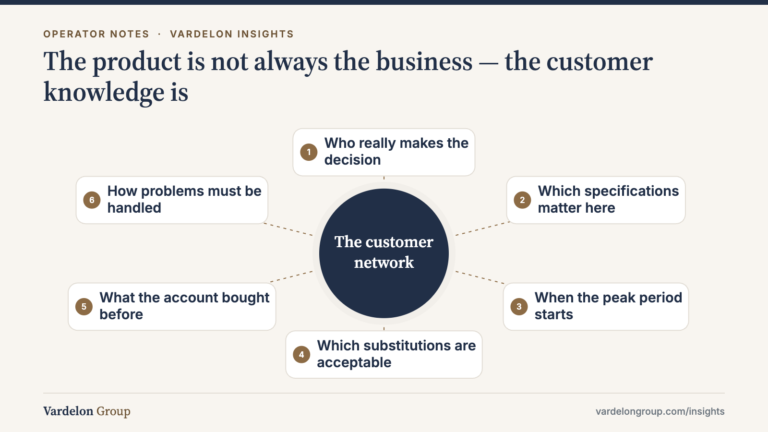
A distributor selling a simple product to 300 hotels may hold something far more valuable than the product: 300 relationships, purchasing histories and delivery routes.
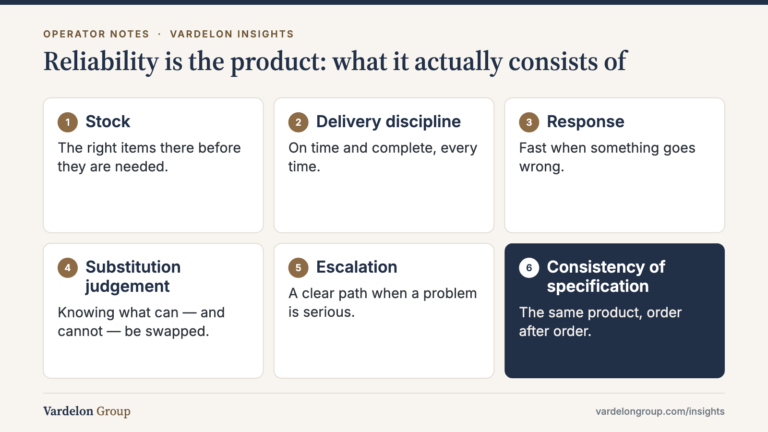
In hospitality supply, the cost of a supplier failing is almost always larger than the saving that caused it. Why reliability, not price, is the durable competitive advantage.
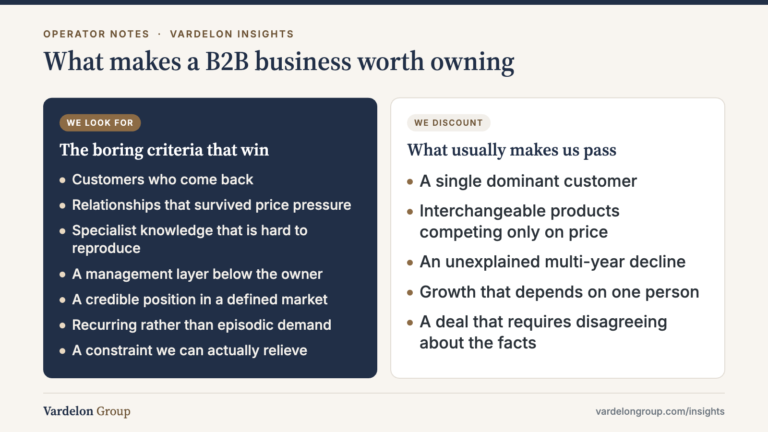
Interesting markets do not automatically contain good companies. The durable characteristics we look for in an established B2B business, and the ones we have learned to discount.
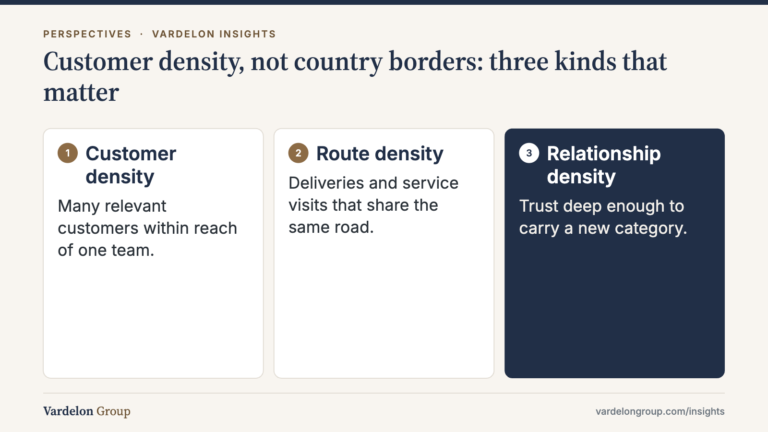
In B2B distribution, the density of trusted customer relationships is a better unit of strategy than geography. Why route density and category adjacency beat country-by-country expansion.