Fragmentation Is Not the Same as Inefficiency
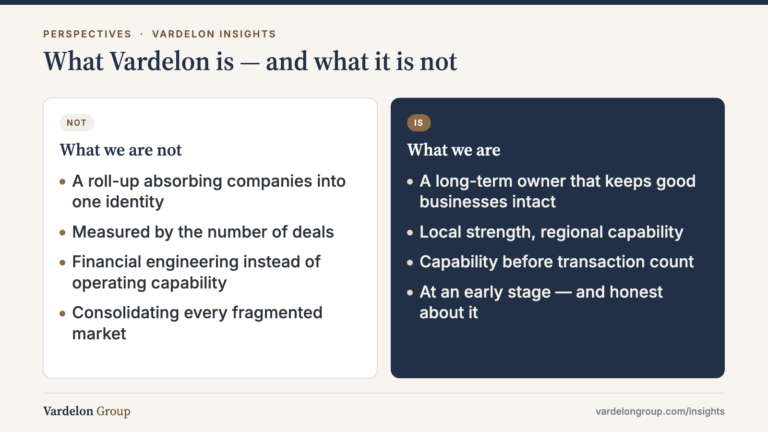
A market with many small companies is not automatically a market waiting for one large one.
Fragmentation attracts a particular kind of analysis. No player holds a meaningful share, therefore the market is inefficient, therefore consolidation will create value. The logic is clean and, in service-intensive B2B markets, frequently wrong.
It is worth separating two different claims. The first is that a market is fragmented, which is a description. The second is that fragmentation is a defect, which is an argument — and one that has to be made rather than assumed.
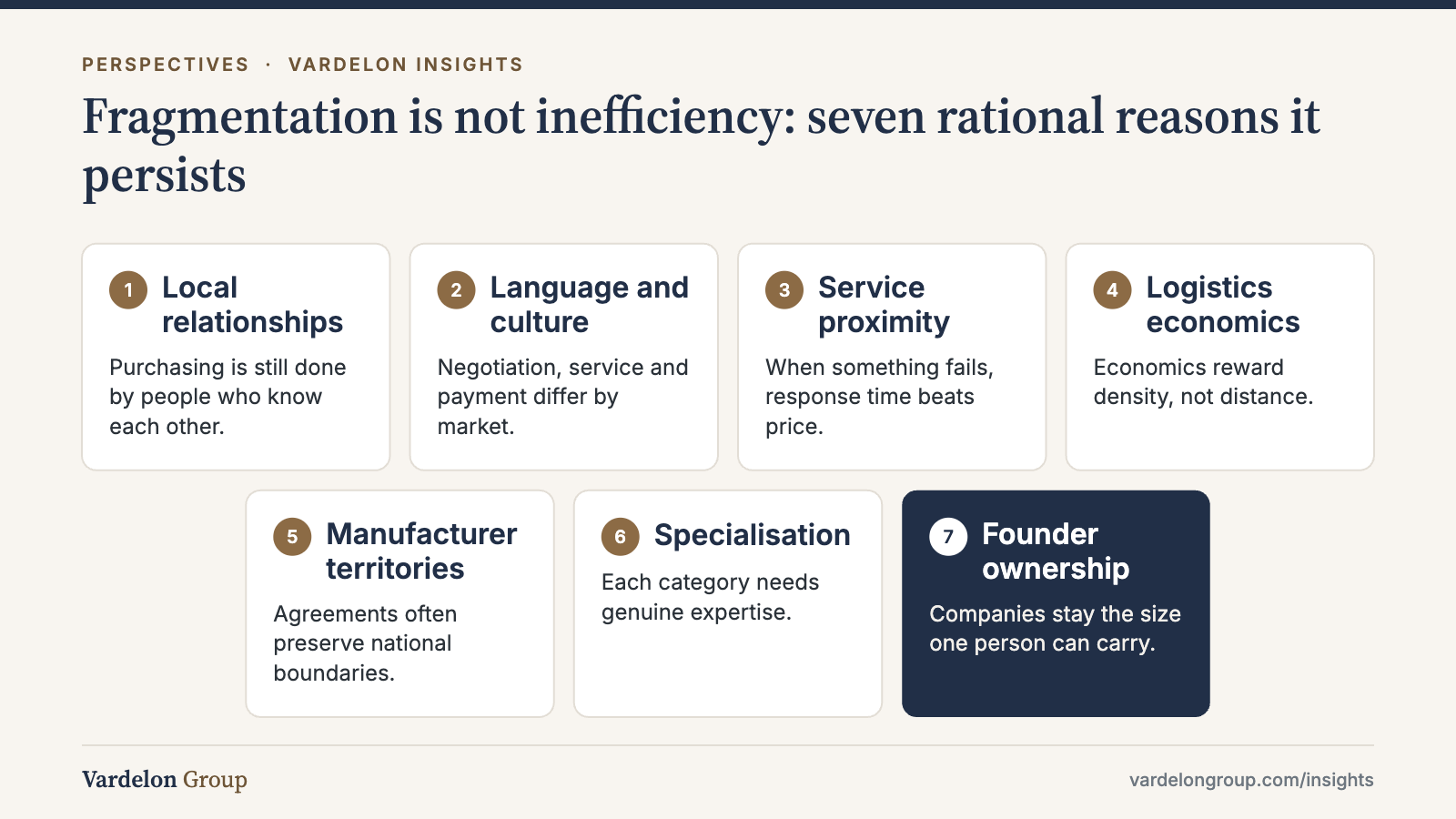
Reasons fragmentation persists
In hospitality infrastructure across Central and Eastern Europe, the structure exists for reasons that hold up on inspection.
- Local relationships. Purchasing is still made by people who know each other, and trust does not transfer with a takeover.
- Language and commercial culture. Negotiation norms, payment behaviour and service expectations differ meaningfully between neighbouring markets.
- Service proximity. When equipment fails in a full hotel, response time beats price.
- Logistics and working capital. Delivery frequency, stockholding and freight reward density, not distance.
- Manufacturer territories. Distribution agreements often preserve national boundaries by contract.
- Category specialisation. Textiles, hygiene, equipment and technical services each require genuine expertise.
- Founder-led ownership. A company built by one person tends to stay the size one person can carry.
Only the last of these is really a structural inefficiency. The others are the market adapting to what customers actually need.
What fragmentation tells you
The persistence of many local businesses is information. It usually indicates where value is being created locally: in relationships, service, knowledge, speed and specialisation.
Which means a consolidation strategy that treats fragmentation as waste is at risk of removing precisely the things customers were paying for. Two companies can look duplicative on an organisational chart while their customer relationships are entirely non-interchangeable.
So what is actually changing?
If fragmentation has been stable for decades, something has to move for the picture to change. Several things are moving at once: hospitality customers are regionalising, procurement is professionalising, the minimum technology capability expected of a supplier is rising, specialist management is expensive, and a generation of founders is approaching succession.
None of that guarantees consolidation. It does change the economics of staying completely isolated.
The better question
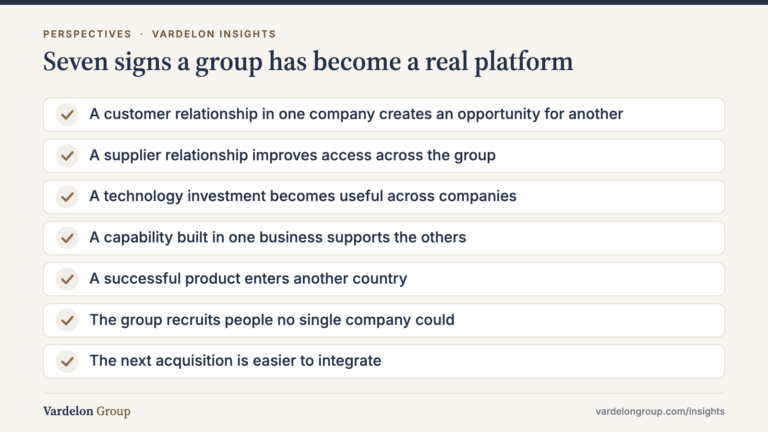
Not how quickly can this market be consolidated, but which local capabilities should stay local, and which become materially better when connected.
That is a harder question, and it requires understanding these businesses at the operating level rather than the market level. It is also the one that produces durable answers.