The Product Is Not Always the Business
The catalogue is the visible part of a distribution business. It is rarely the valuable part.
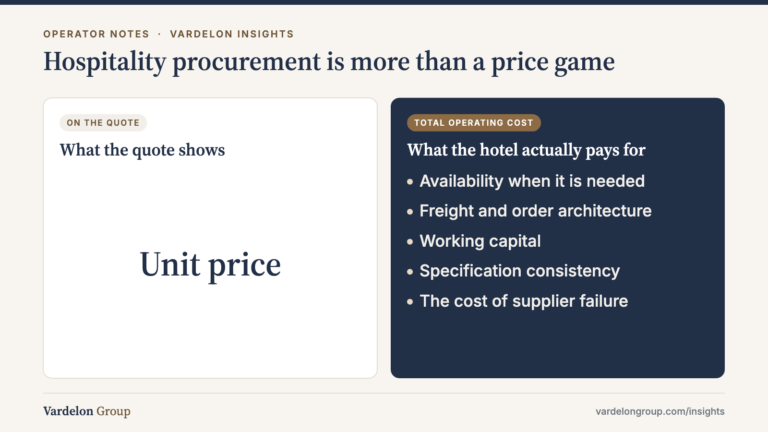
Look at a hospitality distributor from the outside and you see products. A range of textiles, a chemical line, a category of equipment. It is natural to conclude that the business is the product, and that a competitor with a better product or a lower price would displace it.
From inside, the picture is different. The same company holds three hundred customer relationships, several years of purchasing history for each, a delivery infrastructure that reaches them economically, and detailed knowledge of who decides what in every account.
The product can be sourced elsewhere. That other set of assets cannot.
Why this distinction matters commercially
If the business is the product, then growth means adding products and competition means price. If the business is the customer network, then growth means adding relevance inside relationships you already hold, and competition means trust.
The second framing usually describes reality better, and it produces different decisions. It suggests spending on service capability rather than on catalogue breadth. It suggests measuring category penetration per customer rather than SKU count. And it suggests that the most valuable expansion is often into an adjacent category for an existing account, not a new account for an existing category.
What the network actually contains
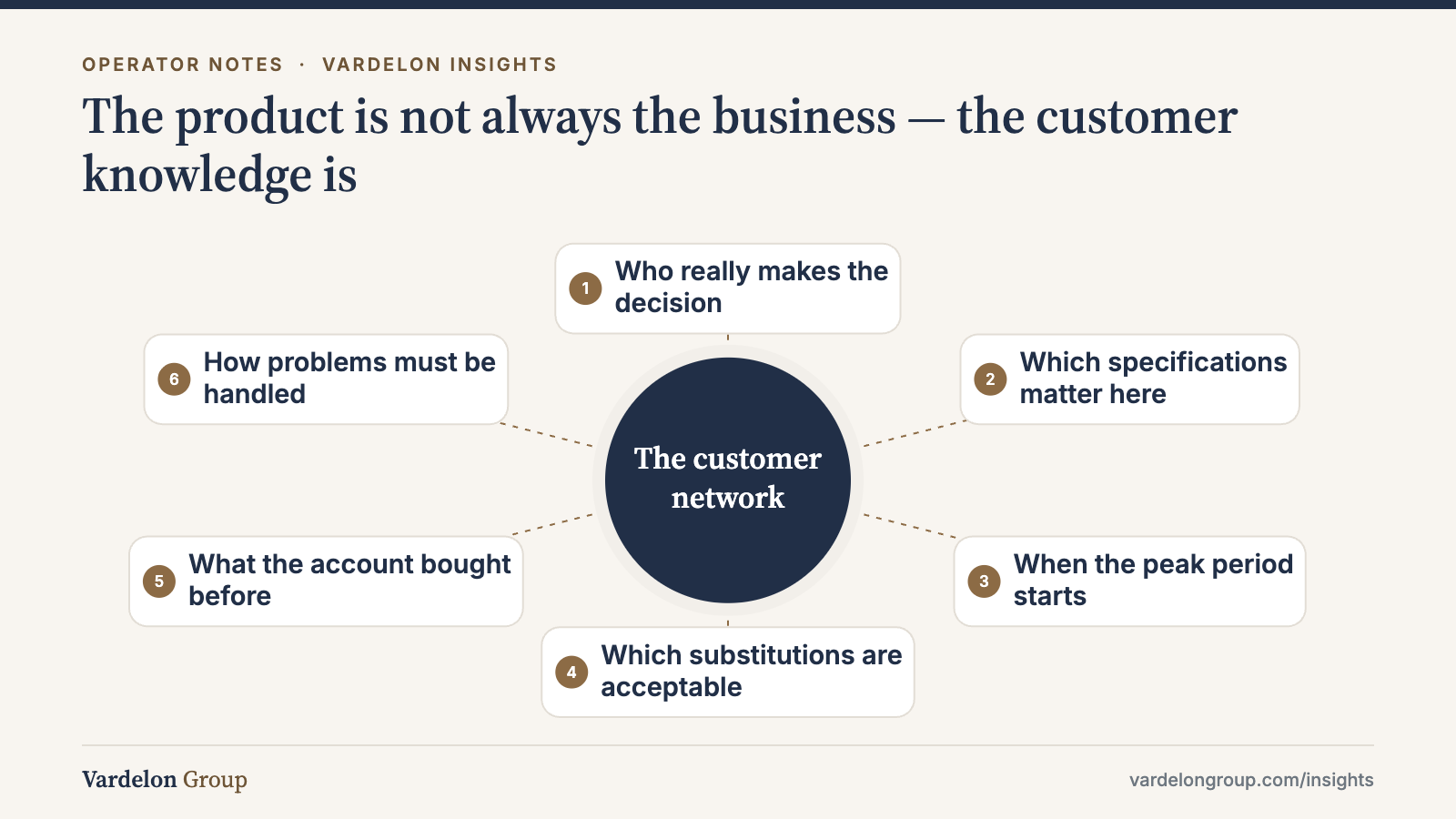
- Who makes the purchasing decision, as opposed to who signs the order
- Which specifications matter to this property and which are negotiable
- When the property enters its peak period
- Which substitutions are acceptable and which generate complaints
- What the account has bought before, and what it stopped buying
- How problems need to be handled in this particular building
Some of this can sit in a CRM. Most of it sits in people, which is why it transfers slowly and why acquiring the customer list of a competitor is not the same thing as acquiring their customers.
The implication for ownership
This is one reason we are cautious about integration. Reorganising a distribution business around the product portfolio is straightforward and looks efficient. It can also quietly dismantle the network that made the company worth acquiring.
The safer sequence is to understand what the relationships contain before deciding what should change. We describe the principle under our approach.
The value is often not in the individual product. It is in the density of the customer network around it.