Pricing Discipline in B2B Distribution
Margin in distribution is rarely lost in one decision. It erodes through discounts nobody reviews, prices that never move and customers nobody reprices.

Shorter, practical observations from operating inside these businesses.
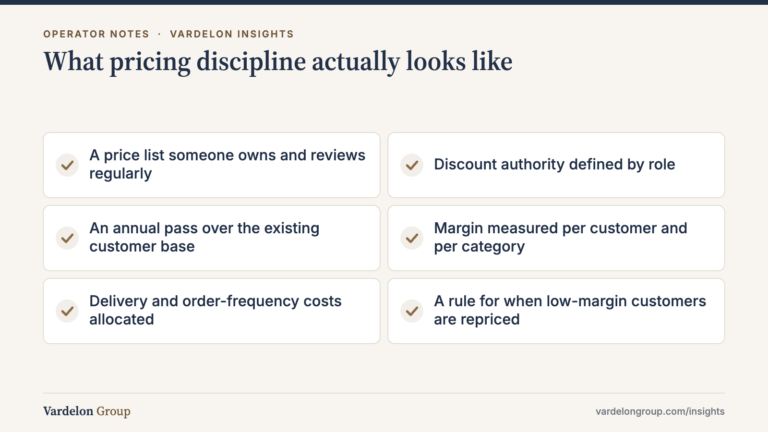
Margin in distribution is rarely lost in one decision. It erodes through discounts nobody reviews, prices that never move and customers nobody reprices.
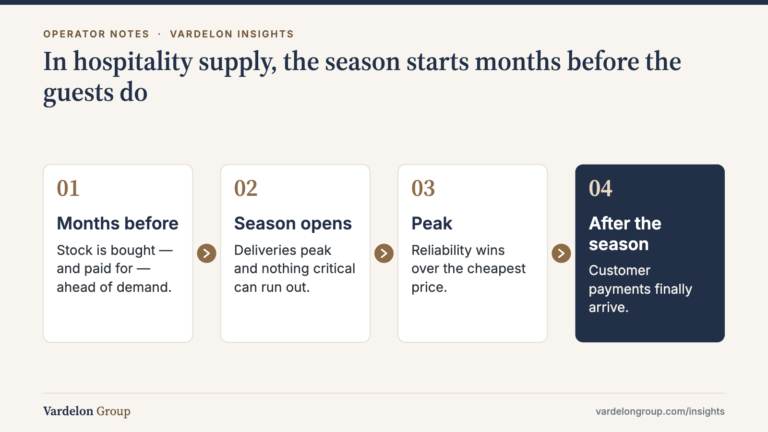
In hotel supply, seasonality shows up first on the balance sheet, not in the sales figures. Why stock, credit terms and cash timing decide who can serve the season well.
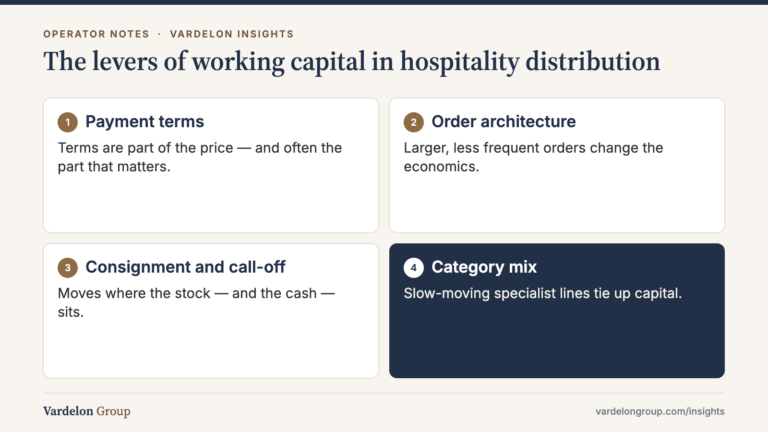
Stock, payment terms and order frequency decide whether a distribution business is comfortable or fragile. A practical look at the balance sheet behind the service promise.
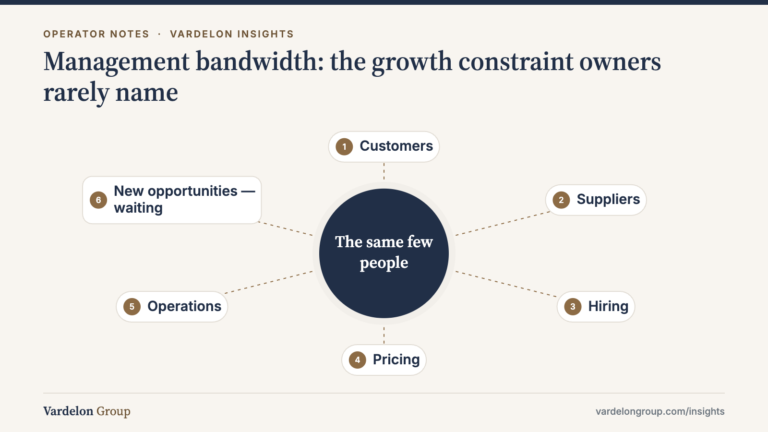
The least visible limit on a founder-led business is senior attention. Why good companies stay smaller than their market, and what a broader group can actually supply.
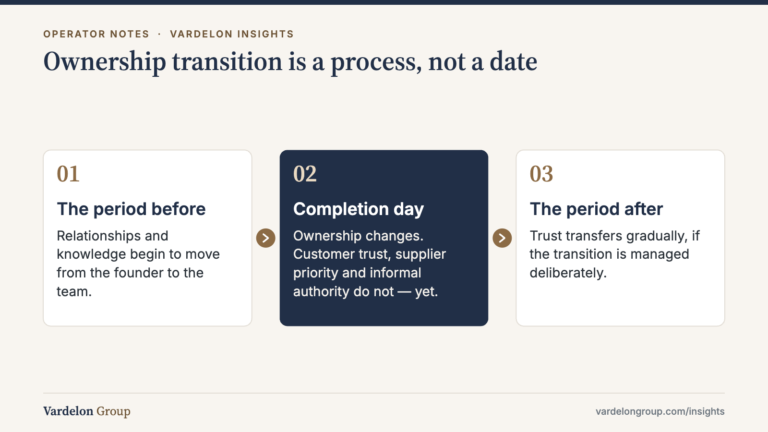
Completion day transfers shares. It does not transfer relationships, knowledge or authority. Why the useful work in a transition happens before and after, not on the day.
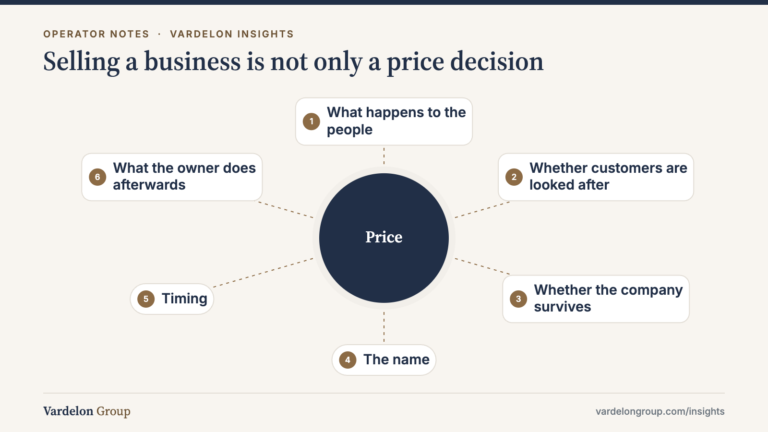
Owners optimise for several outcomes at once: continuity for staff, the survival of the brand, timing and personal reputation. Price is one variable among several.
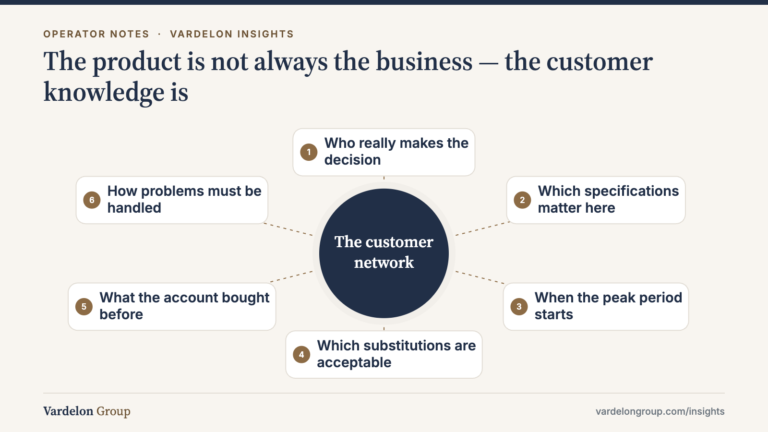
A distributor selling a simple product to 300 hotels may hold something far more valuable than the product: 300 relationships, purchasing histories and delivery routes.
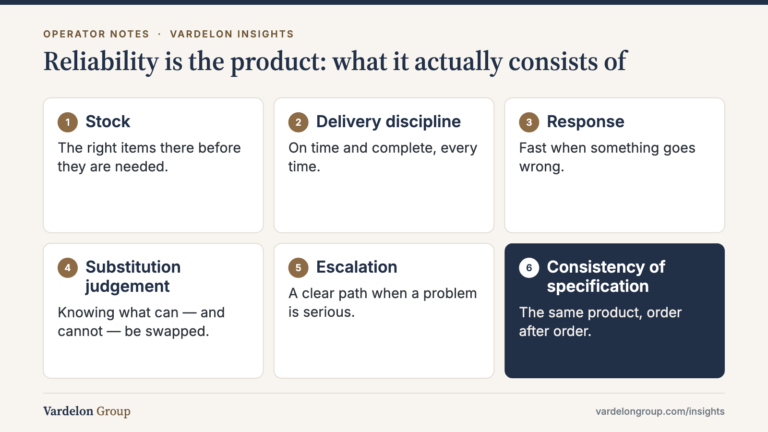
In hospitality supply, the cost of a supplier failing is almost always larger than the saving that caused it. Why reliability, not price, is the durable competitive advantage.
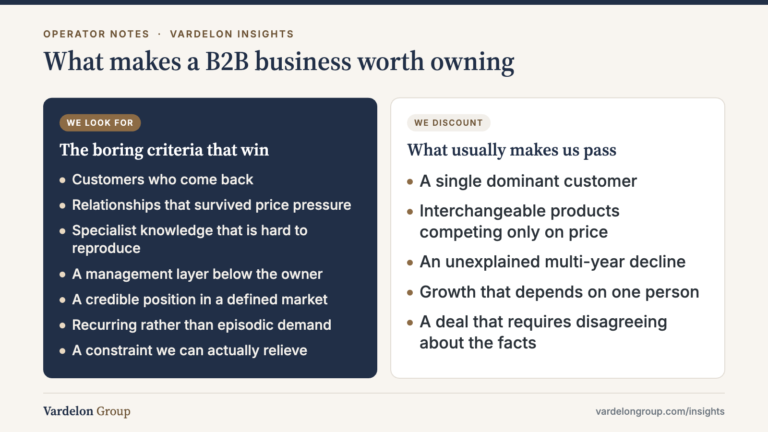
Interesting markets do not automatically contain good companies. The durable characteristics we look for in an established B2B business, and the ones we have learned to discount.
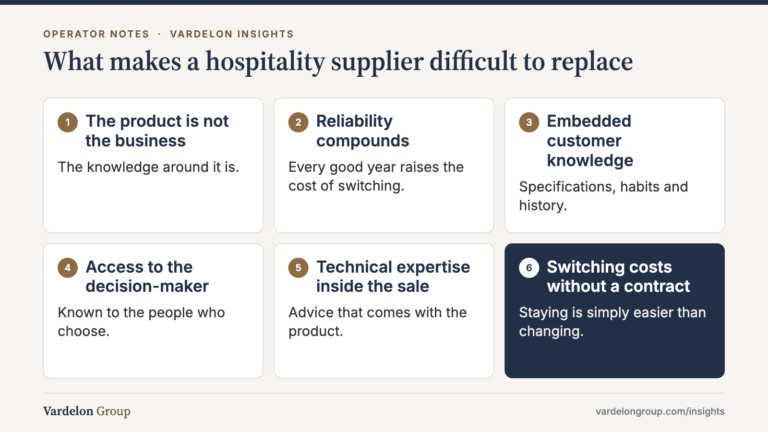
B2B switching costs can exist without contractual lock-in. Reliability, embedded customer knowledge and technical capability are what make an apparently ordinary supplier hard to displace.