Working Capital in Hospitality Distribution
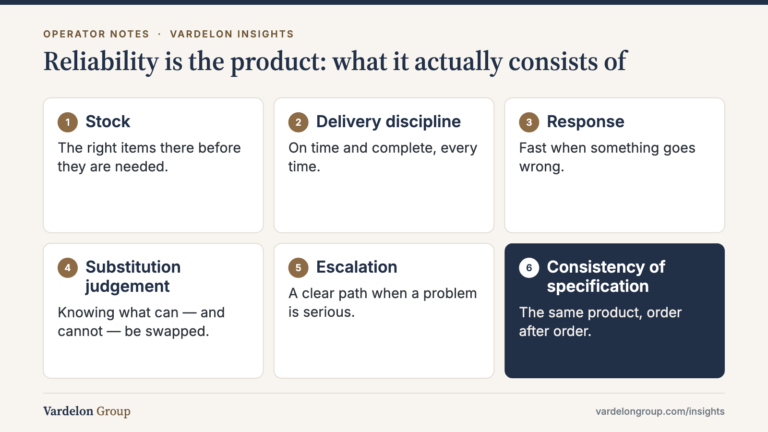
In distribution, the service promise and the balance sheet are the same conversation. Someone is financing the stock that makes reliability possible.
A supplier who never runs out is not simply well organised. They are holding inventory, and inventory is capital that is not doing anything else until it is sold.
This is one of the least discussed and most decisive aspects of hospitality distribution, and it explains a surprising number of commercial decisions that look irrational from outside.
The three levers
Stock. Depth in the categories where failure is expensive; thinness where it is not. Getting this wrong in either direction is costly: too little and the reliability promise breaks, too much and the business finances product that sits.
Payment terms. The gap between paying suppliers and being paid by customers is, in effect, a loan the distributor extends to the market. In hospitality, where seasonality is pronounced, that gap moves through the year.
Order frequency. Every order carries a fixed handling cost regardless of value. A customer ordering weekly in small quantities is a different economic proposition from one ordering monthly on pallets, even at identical annual volume.
Why seasonality makes it harder
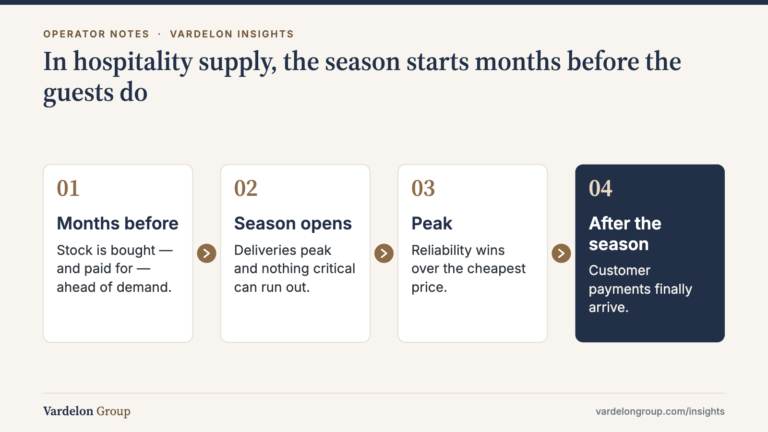
Hospitality demand is not flat. Properties build stock before peak periods, run down afterwards, and close or reduce operations in some markets entirely. A distributor therefore finances a build-up before the season, collects afterwards, and carries the difference.
A business that is comfortable in October can be tight in April for reasons that have nothing to do with profitability.
What this means commercially
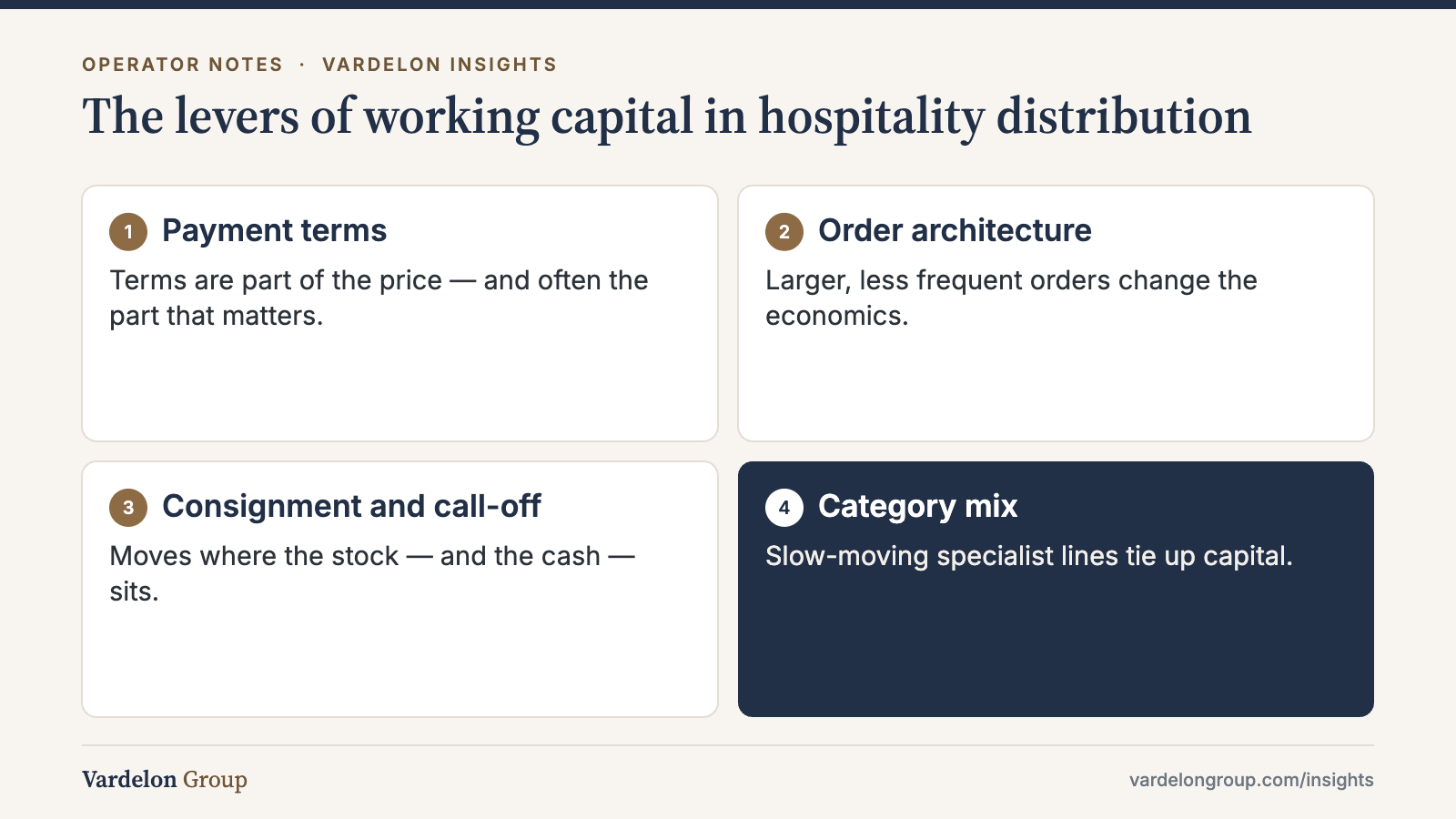
- Terms are part of the price, and often the part the customer values most
- A discount for larger, less frequent orders can be worth more to both sides than a headline price cut
- Consignment and call-off arrangements move the financing rather than removing it — the question is who is better placed to carry it
- Category mix matters: slow-moving specialist stock and fast-moving consumables behave completely differently
And for anyone acquiring one of these businesses
Working capital is where valuation surprises live. A normalised level has to be agreed, seasonality has to be understood rather than averaged, and a business that has been managing cash by stretching suppliers will need funding that does not appear in the headline price.
None of this is exotic. It is simply the part of the business that does not show up in a product catalogue. Related: Why hospitality procurement is more than a price game →