Hotel Textiles and Laundry: How the Economics Work
Linen looks like the simplest product a hotel buys. The economics behind it are among the most interesting in hospitality infrastructure.
Textiles and the laundry services around them sit at an unusual intersection: a commodity-looking product, a capital-intensive service, and a customer relationship where failure is immediately visible to guests.
Why the product is not the point
A towel is a towel until you count wash cycles. A textile that survives forty industrial washes rather than eighty is not cheaper; it is twice as expensive per use, before accounting for the disruption of replacing it early.
Specification knowledge — weight, weave, fibre composition, how a fabric behaves in a particular water hardness and wash chemistry — is genuine expertise, and it is the reason experienced suppliers hold positions against cheaper entrants.
Rental versus purchase
The category splits into two economic models. In purchase, the hotel owns the stock and manages the wash. In rental, the service provider owns the textiles and delivers clean linen on a recurring basis.
Rental converts a capital item into an operating expense for the hotel and creates a recurring, contracted revenue line for the supplier. It also concentrates capital intensity, laundry capacity and route logistics on the supplier side — which is precisely what makes the category defensible.
Route density decides profitability
Laundry is a logistics business with a chemical process attached. The economics are driven by how many properties sit on a route, how often they are served, and how full the vehicle is.
This means market position is intensely regional. A strong operator in one city can be uncompetitive two hours away, not because of price but because of density. It also means consolidation logic in this category has to follow routes rather than borders.
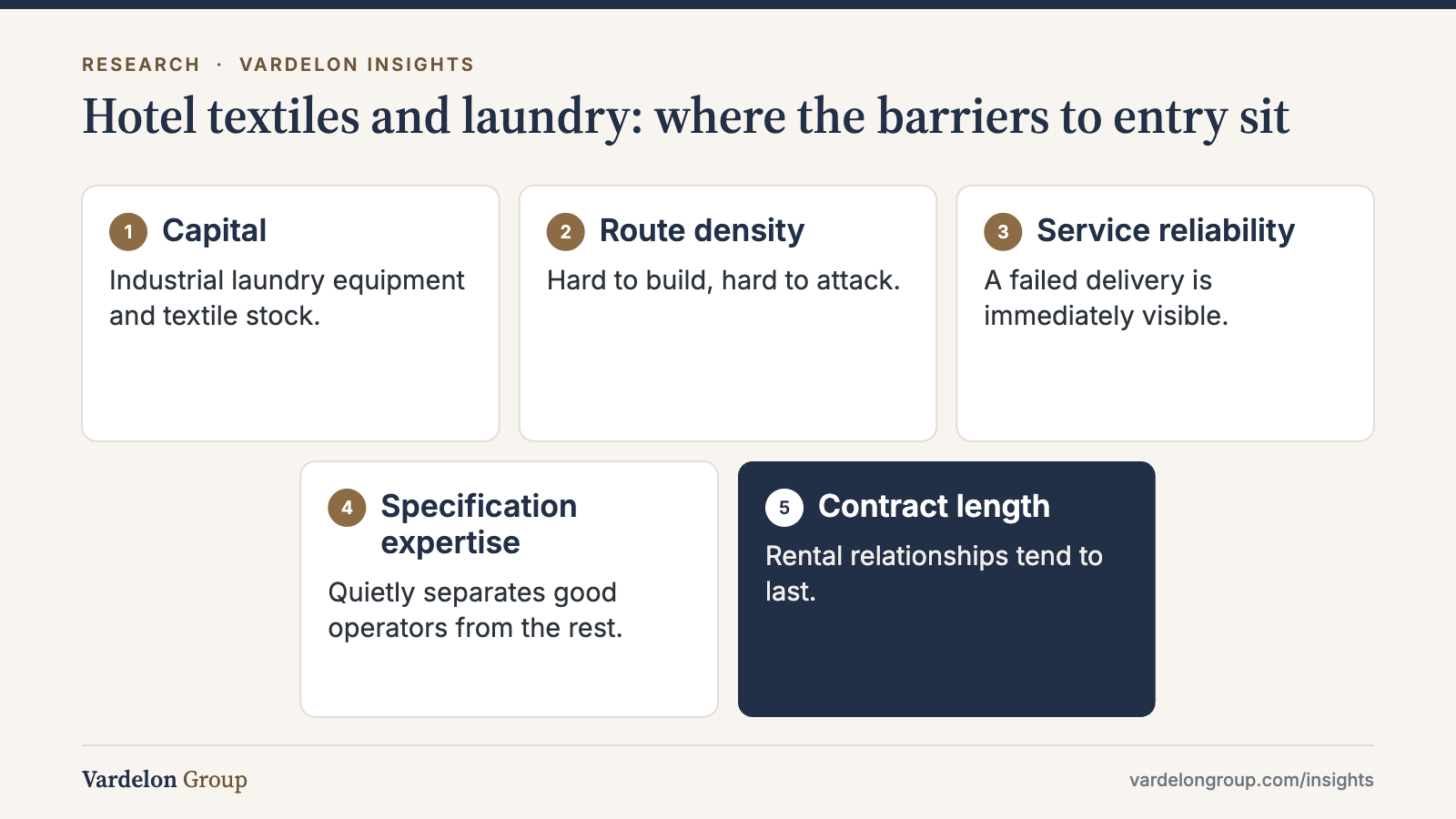
Where the barriers sit
- Capital: industrial laundry equipment and textile stock are both expensive
- Route density: hard to build, hard to attack once established
- Service reliability: a failed delivery is immediately visible to guests
- Specification expertise: quietly separates good operators from cheap ones
- Contract length: rental relationships tend to be multi-year
Why it matters for the region
Across Central and Eastern Europe this category remains largely national and frequently founder-owned, while hotel customers increasingly operate across several markets and expect consistent specification and service standards.
That combination — capital intensity, route economics, regionalising customers and approaching ownership succession — is what makes it structurally interesting to us.