The Limits of Greenfield Expansion
Greenfield entry looks cheaper than acquisition because most of its costs are not invoiced.
Comparing the two options usually starts with a price. An acquisition has one; setting up an office does not. On that basis, building appears to be the disciplined choice.
The comparison is misleading, because the expensive part of entering a market is not the setup cost. It is the time spent without a position.
What greenfield actually costs
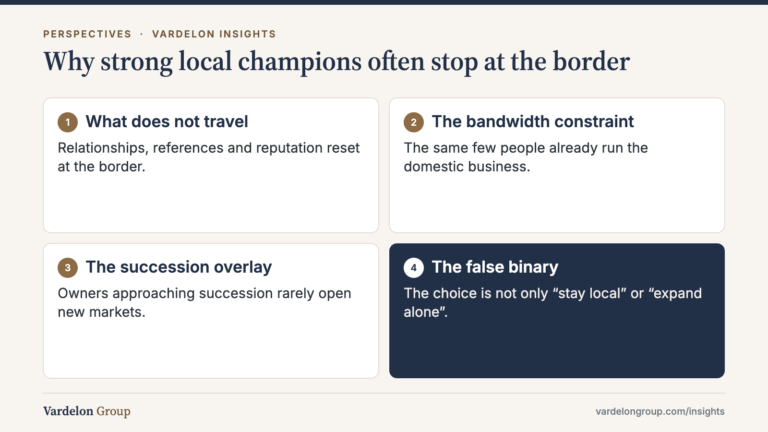
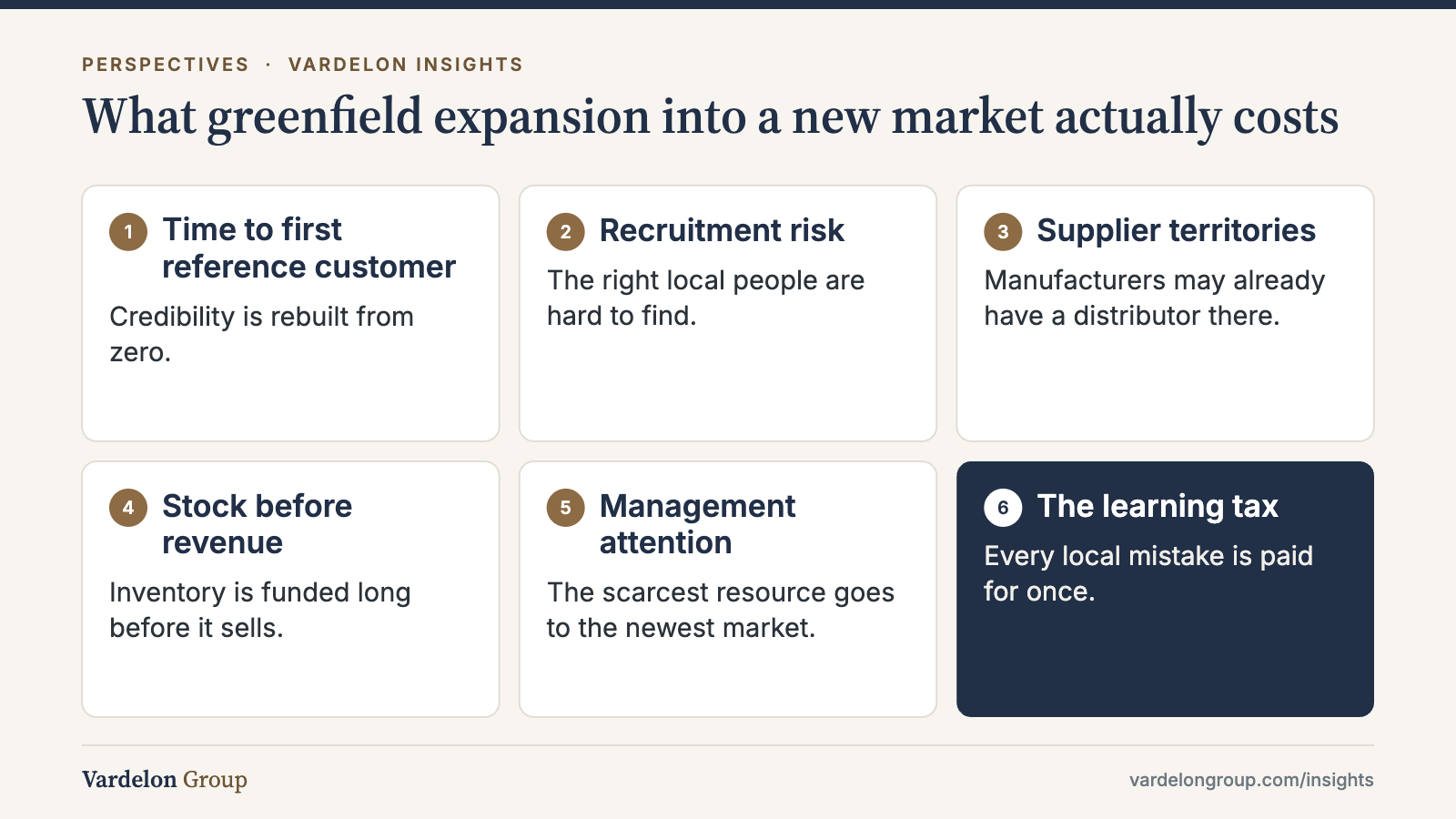
- Time to first reference customer. In relationship-driven B2B this is the single largest hidden cost. Nobody wants to be your first hotel in the country.
- Recruitment risk. The salesperson who knows the market is expensive and hard to hire; the one who does not is cheap and slow.
- Supplier territories. The manufacturer you represent at home may already have a distributor there, contractually.
- Stock before revenue. Service expectations require inventory that must be financed before it is justified.
- Management attention. The scarcest resource, drawn from the profitable home business.
- The learning tax. Pricing mistakes, credit mistakes and specification mistakes that a local operator would not make.
Where it does work
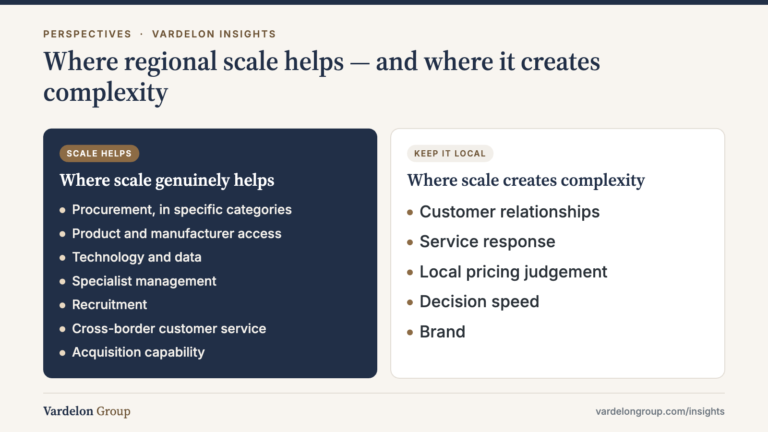
Greenfield entry works best where the value sits in the product rather than the service around it, where customers are centralised enough to reach without a local network, where the manufacturer relationship travels, and where the company can genuinely afford several unprofitable years without letting the core business suffer.
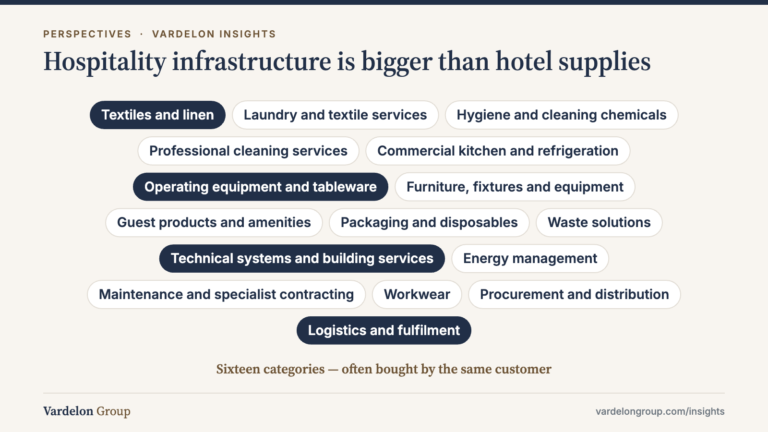
It works worst where response time is the product — which describes a large share of hospitality infrastructure.
The alternative
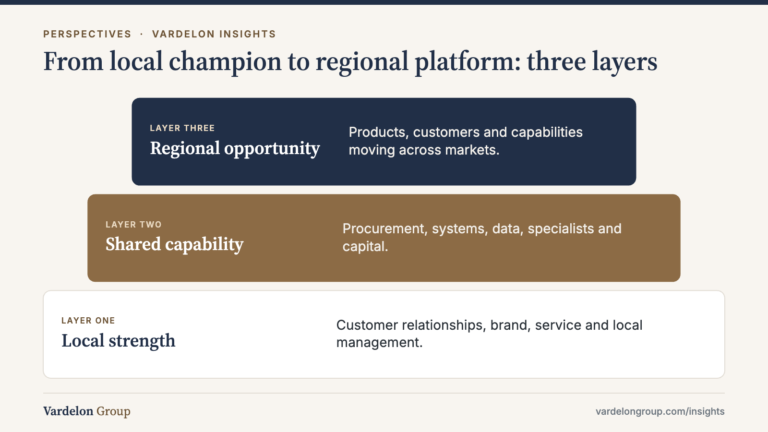
Connecting to a business that has already paid those costs. A strong local company brings reputation, references, service capability and staff who know the territory. What it often lacks — product breadth, systems, capital, specialist management — is exactly what does not need to be local.
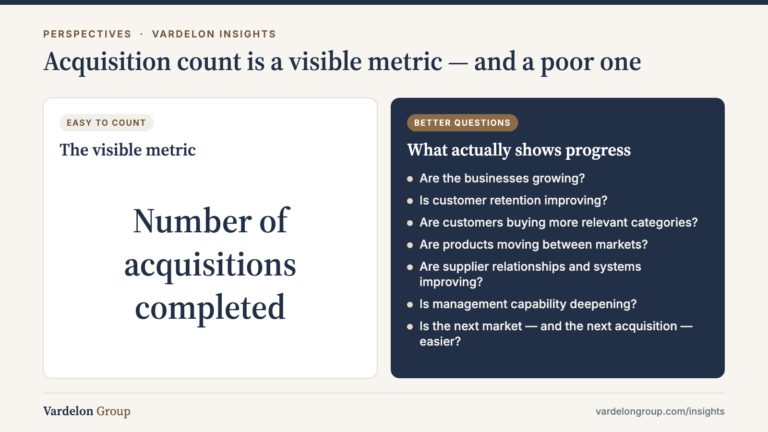
That is not an argument that acquisition is always right. It is an argument that the comparison should include the costs that never appear on an invoice.