Hospitality Infrastructure Is Bigger Than Hotel Supplies
When people hear hotel supply, they usually think of amenities and towels. That is a small part of a much larger operating layer.
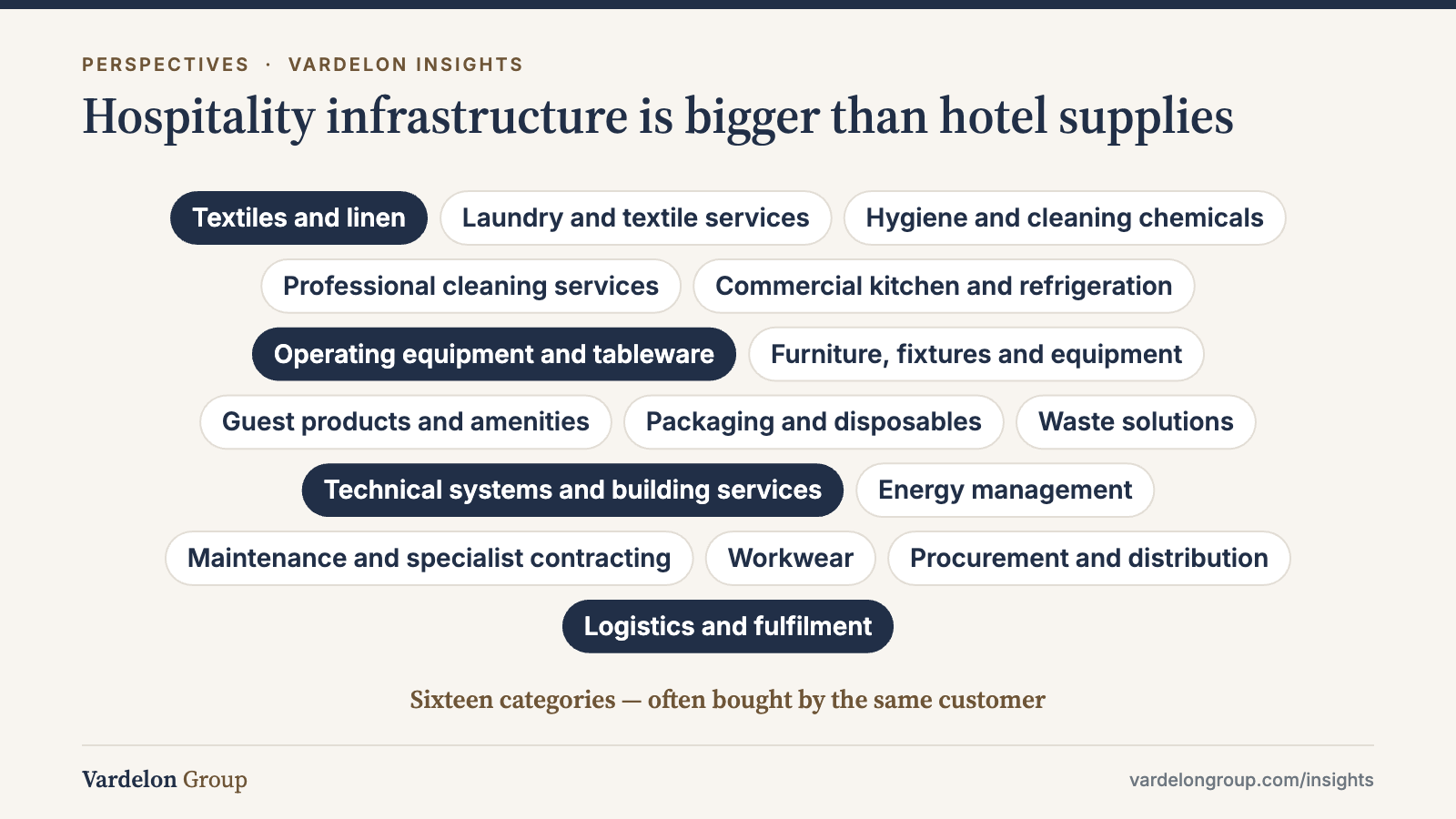
A hotel is a complex operating environment, and behind every property sits a network of businesses supplying what it needs to function. Most of these categories never appear in conversations about the hospitality industry itself.
The actual list
- Textiles and linen
- Laundry and textile services
- Hygiene and cleaning chemicals
- Professional cleaning services
- Commercial kitchen and refrigeration
- Operating equipment and tableware
- Furniture, fixtures and equipment
- Guest products and amenities
- Packaging and disposables
- Waste solutions
- Technical systems and building services
- Energy management
- Maintenance and specialist contracting
- Workwear
- Procurement and distribution
- Logistics and fulfilment
On paper these belong to different industries with different classification codes. In practice they are bought by the same people, in the same building, sometimes in the same week.
Why the framing matters
We use the term hospitality infrastructure because it describes the market from the customer’s perspective rather than by industrial classification.
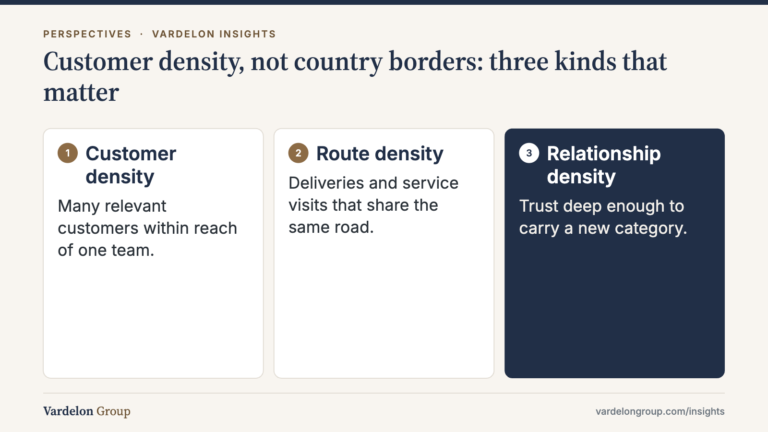
That difference has a practical consequence. If two businesses are classified in entirely separate sectors but sell into the same hotel customer base, they may have far more commercial adjacency than their industry codes suggest. Traditional sector boundaries can therefore hide opportunities that customer relationships reveal immediately.
What it changes strategically
It changes where you look for adjacency. It changes how you value a customer network, because the network can carry more than one category. And it changes the definition of a competitor: a supplier’s real competition for share of wallet may be a company in an entirely different industry that already has a stronger relationship with the same buyer.
It also explains why we describe our focus as a layer rather than a product category. See the categories we focus on →
The limit of the idea
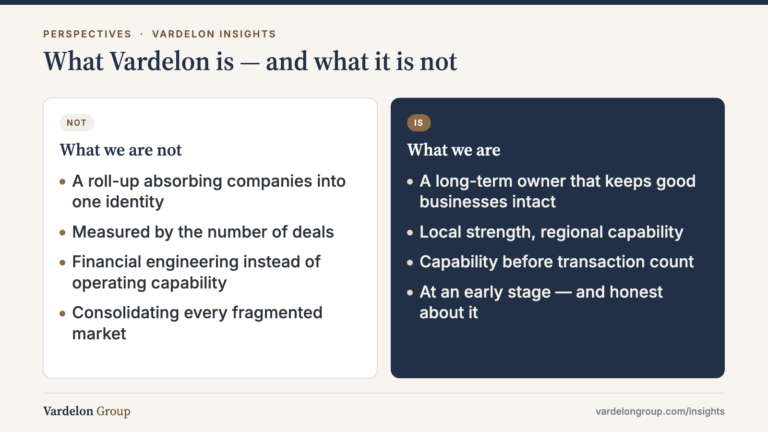
Being one layer does not make it one business. Chemicals with technical dosing systems behave nothing like a linen rental operation, and a project-based furnishing package behaves nothing like a weekly consumable delivery.
The customer is shared. The operating models are not, and any strategy that forgets the second half of that sentence will run into trouble quickly.