Where Procurement Scale Actually Matters
Procurement synergy is the most frequently claimed and least frequently evidenced benefit in acquisition models.
The logic is simple enough to be persuasive. Company A buys 100. Company B buys 100. Together they buy 200, therefore they should pay less. Sometimes that is exactly what happens. Sometimes almost nothing happens at all.
What determines the difference
Real purchasing advantage depends on far more than combined volume.
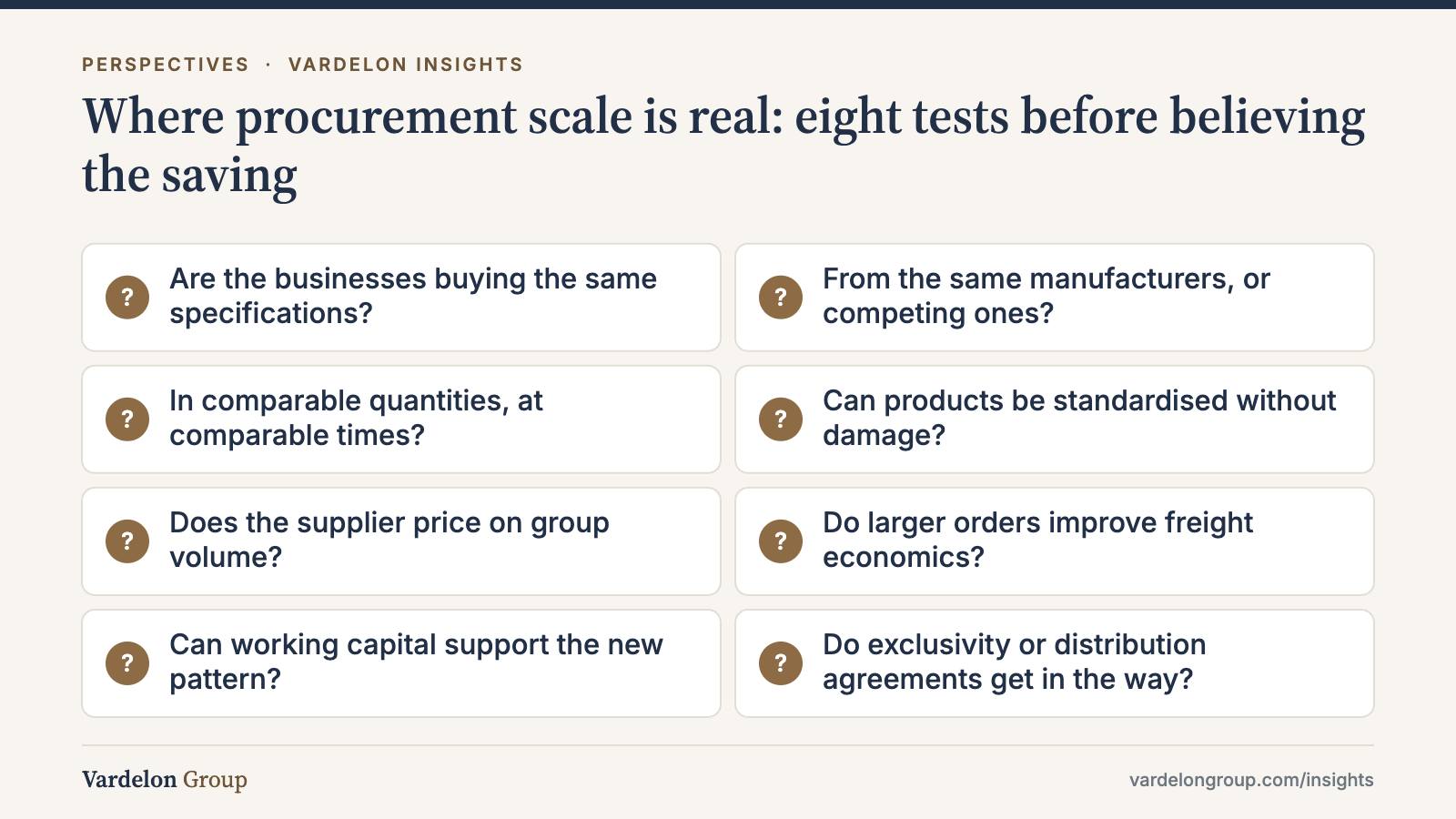
- Are the businesses buying the same specifications, or similar-looking different ones?
- From the same manufacturers, or from competing ones?
- In comparable quantities and at comparable times of year?
- Can products be standardised without damaging the customer proposition?
- Does the supplier price on group volume, or on performance in each local market?
- Do larger orders actually improve freight economics, or just increase stockholding?
- Can working capital support a different purchasing pattern?
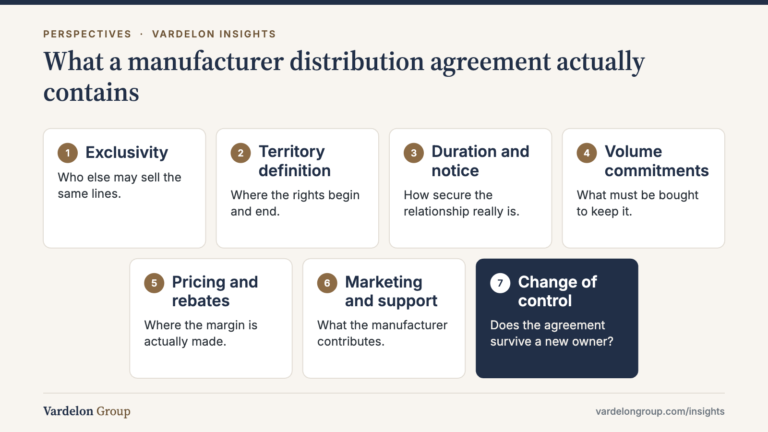
- Are there exclusivity agreements or distributor territories in the way?
Each of these can turn a theoretical saving into no saving at all.
Where it usually is real
Commodity consumables bought to a common specification. Categories with a small number of large manufacturers. Freight and logistics where routes genuinely overlap. Indirect spend — insurance, energy, telecoms, software — which is often ignored and frequently the easiest win.
Where it usually is not
Specialist equipment bought against project requirements. Categories where the manufacturer relationship is exclusive by territory. Products where the specification is set by the customer rather than the supplier. And anything where the local business has a better relationship with the manufacturer than a new group would.
How to test it before believing it
Map actual purchasing. Category by category, supplier by supplier, country by country. Compare specifications, not descriptions. Talk to the manufacturers about how they price, rather than assuming.
This work is slow and unglamorous, and it is the difference between a synergy and an assumption. A model that contains a procurement percentage because acquisition models are expected to contain one is not evidence.
Related: Why hospitality procurement is more than a price game →