Scale Is Not a Strategy
Scale is not a strategy. It is an outcome of one, and it only arrives if something specific becomes genuinely better.
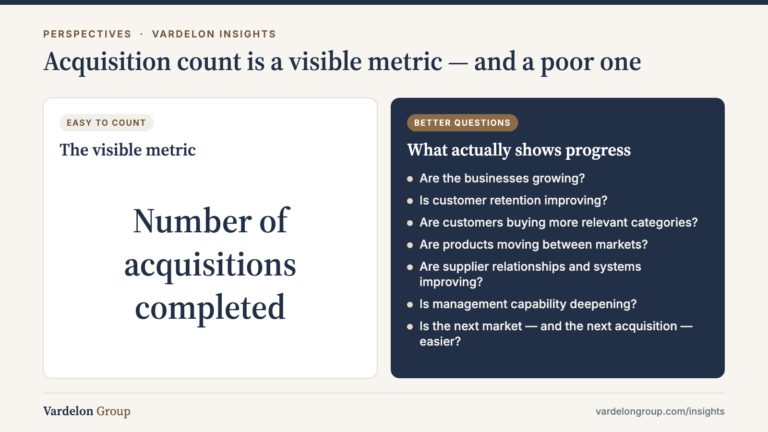
Consolidation is often described in terms of size. Combined revenue, number of companies, market share. These are easy to state and easy to verify, which is part of why they dominate the conversation.
They also say almost nothing about whether the resulting organisation is better than its parts.
The questions that matter
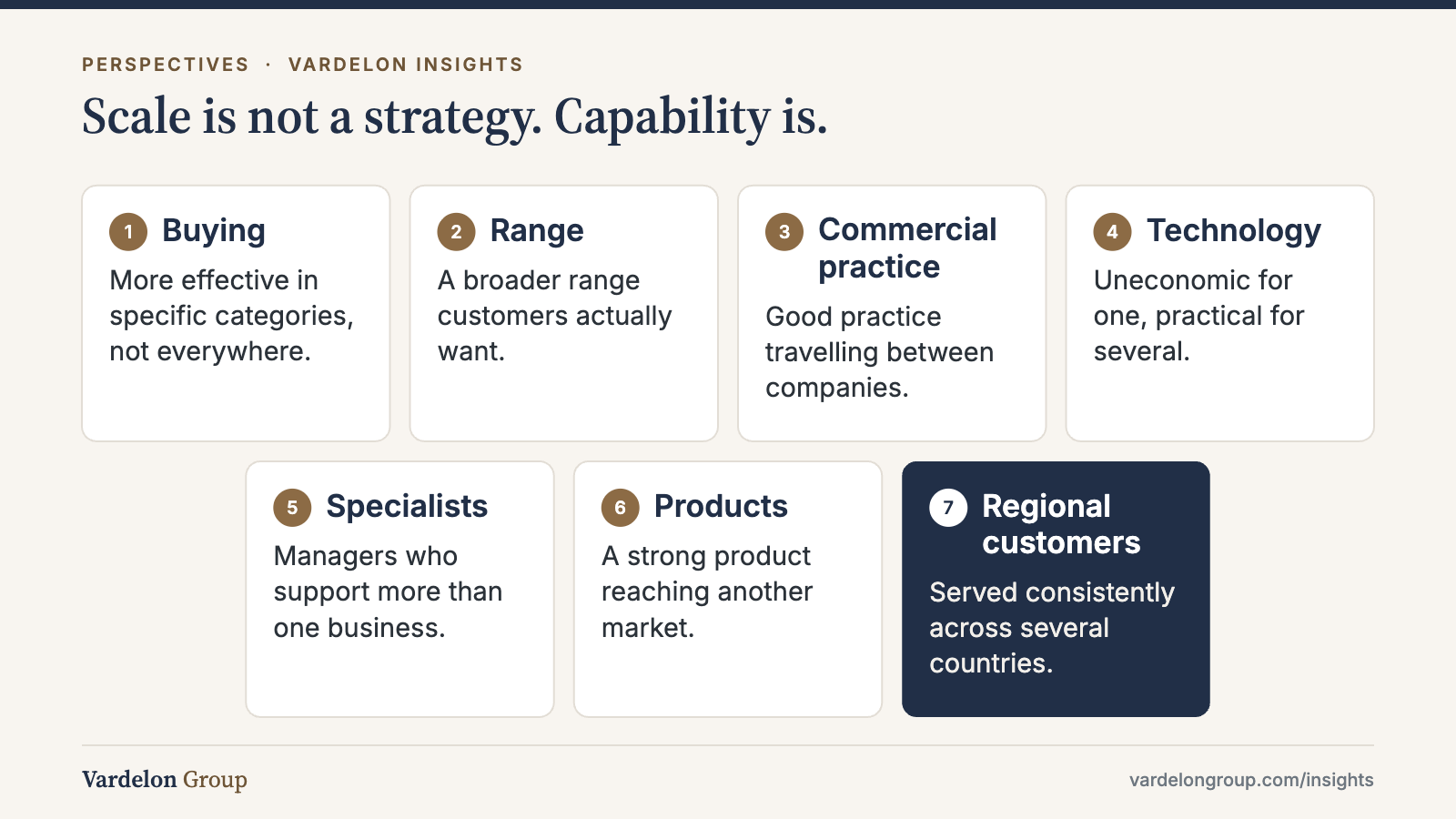
Instead of asking how much revenue can be assembled, we prefer to ask what becomes genuinely better because these businesses are connected.
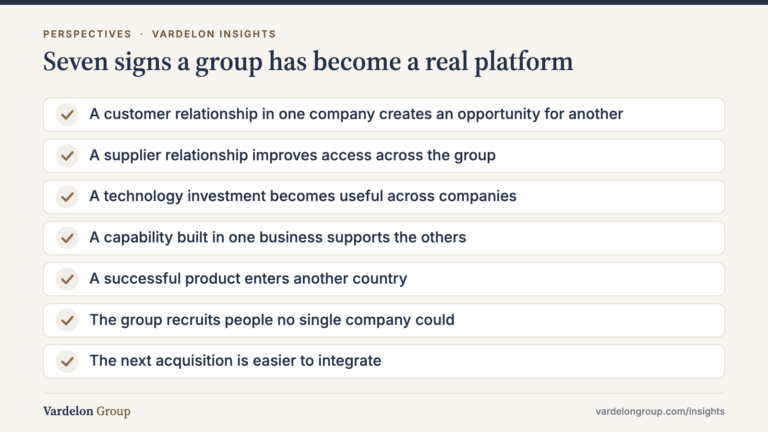
- Can they buy more effectively — in which categories, from which suppliers?
- Can customers access a broader range of genuinely relevant products?
- Can good commercial practice travel between companies?
- Can technology that is uneconomic for one become practical across several?
- Can specialist managers support more than one business?
- Can a strong product in one market reach another through an existing customer network?
- Can a regional hotel customer be served better across countries?
These are operating questions with checkable answers. If enough of them are yes, scale becomes powerful. If they are not, consolidation produces a larger organisation with more complexity and the same underlying businesses.
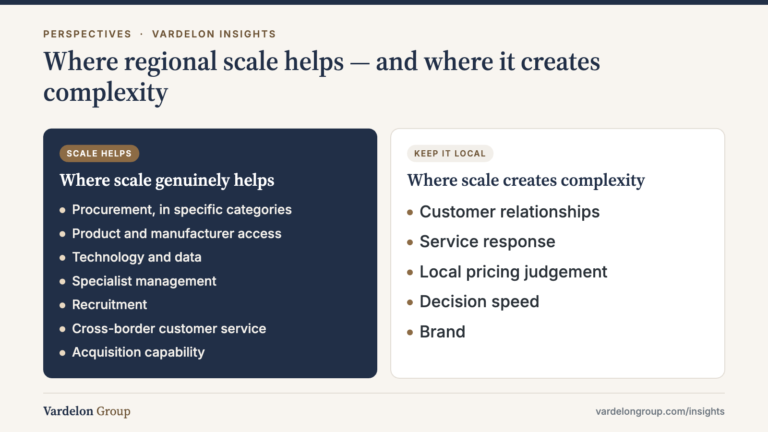
Where size actively costs something
Additional layers slow decisions. Central pricing is worse in markets that behave differently. Reporting requirements consume management time that used to be spent with customers. Integration projects absorb attention for years.
None of these are arguments against scale. They are arguments for being specific about what scale is for.
Capability, not size
The distinction we keep returning to is between theoretical scale and usable scale. Two companies buying different specifications from different manufacturers in different quantities do not buy better together simply because the volumes add up on paper.
That is why we prefer to evidence procurement advantage category by category rather than model it as a percentage, and why we are more interested in whether the underlying businesses are improving than in how many have been acquired.
Size without capability is just a bigger number.