Ownership Transition Is a Process, Not a Date
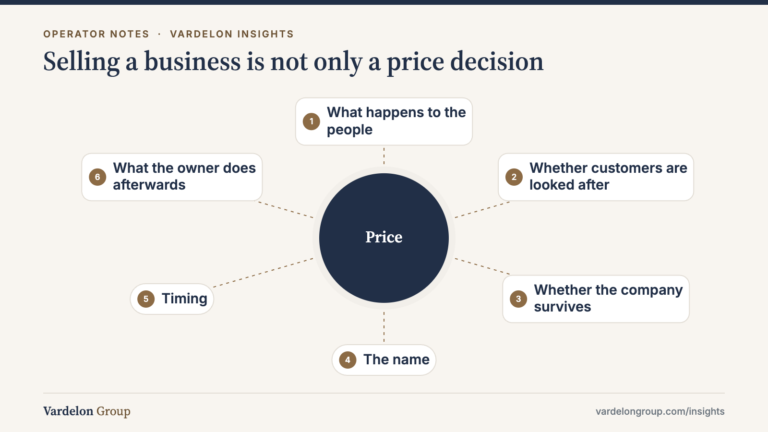
Shares transfer on a date. Relationships, knowledge and authority transfer over a period, or they do not transfer at all.
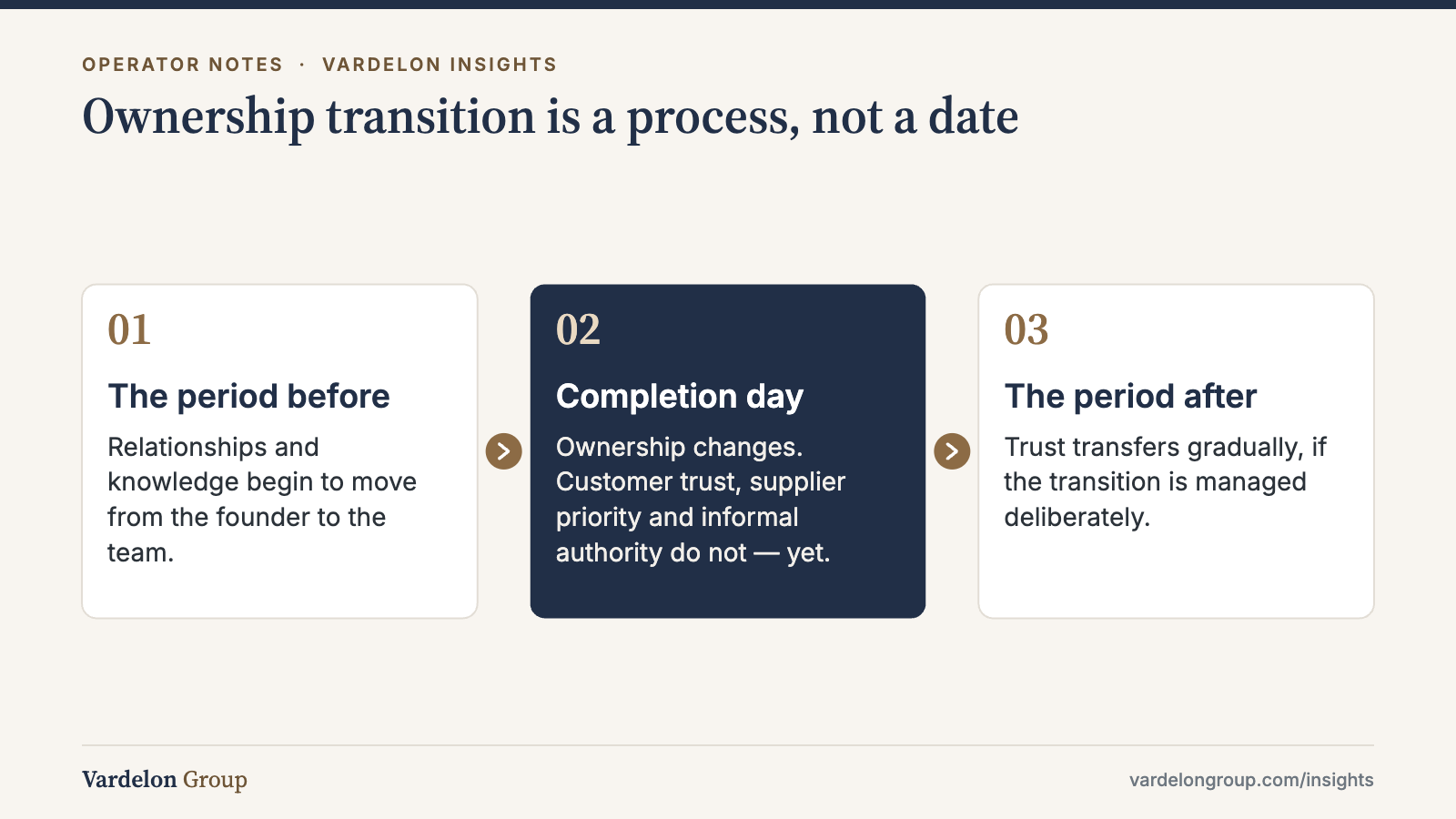
Transactions are organised around a completion date, and that framing quietly shapes expectations. Everything is described as before or after. In practice, the things that determine whether an acquisition works are distributed across a much longer period, most of it on either side of the day itself.
What does not move on completion day
- The customer who has called the same mobile number for fifteen years
- The supplier who gives priority allocation because of a personal relationship
- The knowledge of which specification fails in which building
- The informal authority that lets someone make a decision without asking
- The staff’s confidence that the company will still be recognisable next year
None of these appear in a share purchase agreement, and none of them are affected by signing one.
The period before
The most useful transitions we have seen started long before anything was formal. Not as a sale process — as preparation.
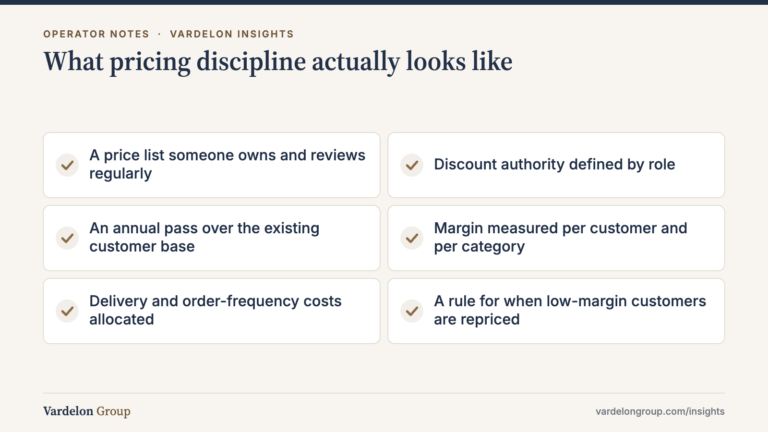
Building the management layer. Making pricing logic explicit. Introducing a second person into the top accounts. Getting reporting honest rather than elaborate. Each of these takes quarters, not weeks, and each raises both the value and the transferability of the business.
The period after
The first year after a transaction is where most value is either protected or lost.
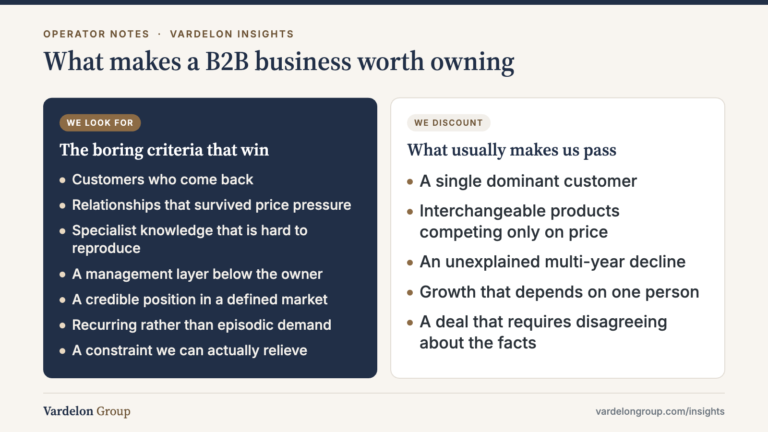
Our starting assumption is continuity: the brand, the team, the customer relationships and the way the business serves its market usually stay as they are, because they are the reason the company was worth partnering with. Changes should be individually justifiable rather than part of a template.
Where a founder stays involved, the useful design is a defined role with a defined purpose — typically the relationships and the judgement, not the administration — rather than an open-ended title.
What good looks like
A transition has gone well when, twelve months later, customers have not had to think about it, the people who mattered are still there, the company can do something it could not do before, and the founder can describe what happened without wincing.
That is a slower standard than a completed transaction. It is the one we think is worth using.