Seasonality Is a Working-Capital Question
In hospitality supply, seasonality is usually discussed as a sales pattern. For the supplier, it is first a working-capital problem.
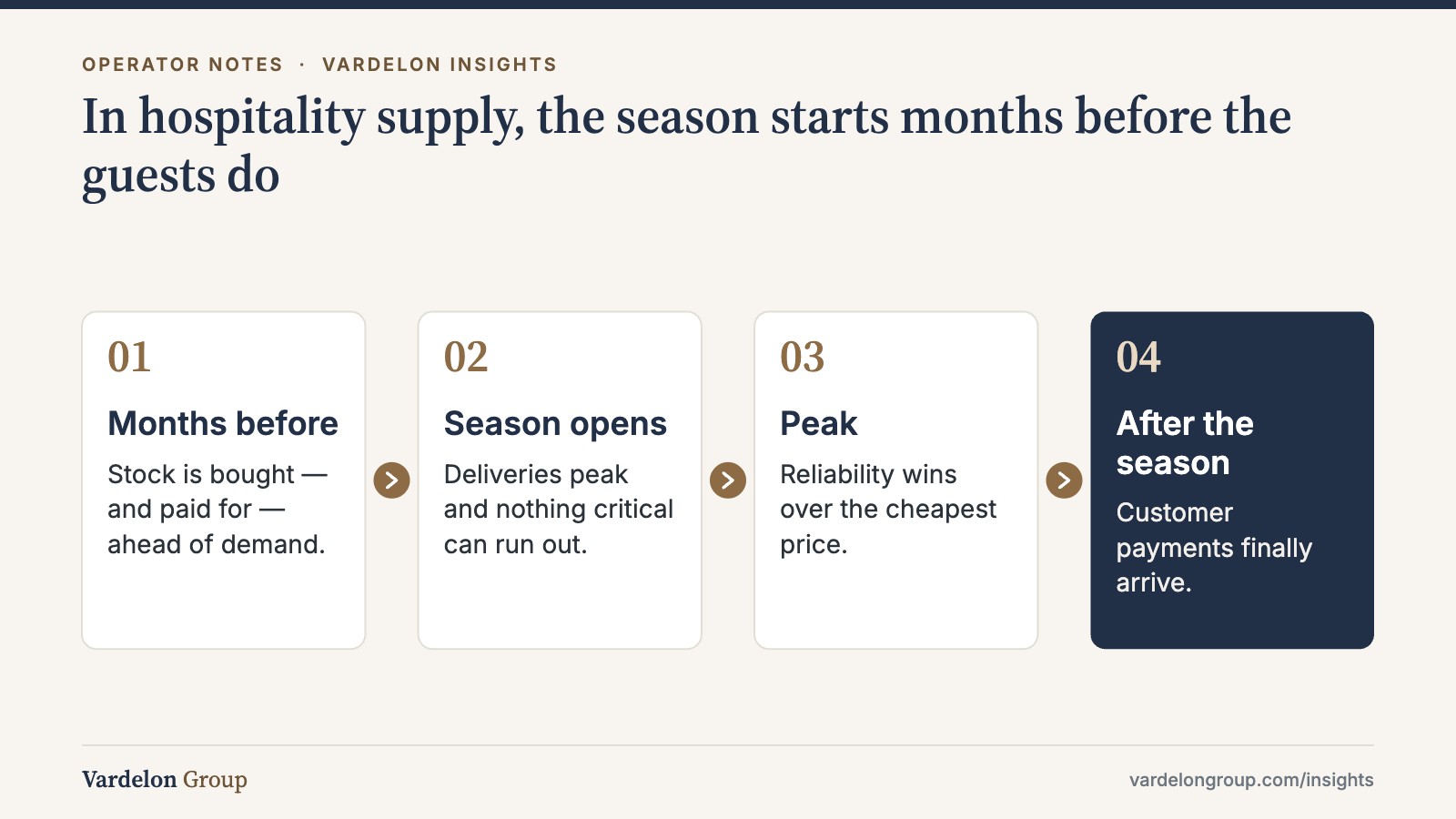
The season starts months before the guests do
Resort hotels, spa towns and lakeside properties in Central and Eastern Europe order heavily ahead of the season. Their suppliers must hold stock before those orders arrive. For amenities, textiles and consumables, this means stock is bought early — often with goods imported from outside the region — and paid for before the customer has paid anything.
Payment runs the other way
Hotels settle invoices on their own terms, and those terms tend to lengthen when occupancy is low. The supplier therefore finances two things at once: inventory ahead of the season and receivables behind it. Neither shows up in a revenue chart, but together they decide how much business a company can take on.
Why this favours the reliable, not the cheapest
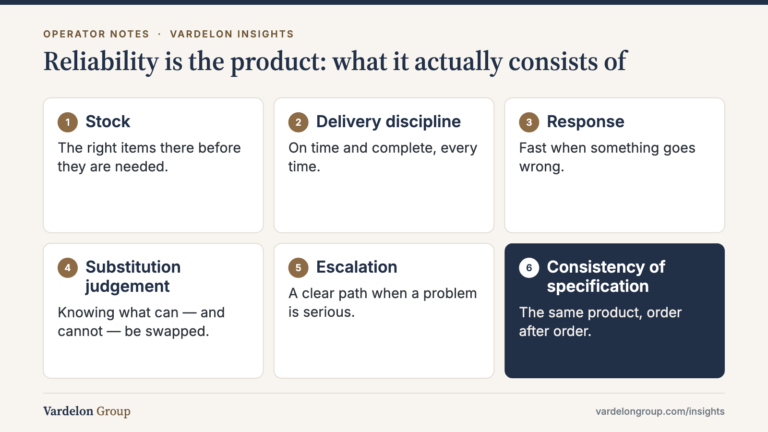
A supplier that is short of cash in May cannot hold enough stock in June. The first thing to suffer is availability — and in hotel supply, a missing delivery costs the customer far more than a slightly higher price ever would. Over time, customers learn which suppliers can carry the season and which cannot. That learning is sticky.
Different seasons in neighbouring markets
A city hotel in Prague or Budapest, a summer resort on the Adriatic or Lake Balaton, and a mountain property in the Tatras do not peak at the same time. A single-market supplier lives with one season. A company serving several markets with different patterns can smooth its stock position, share inventory across borders and use the same capital more than once a year.
That is not an argument for scale in general. It is an argument for a specific capability: matching stock, credit and logistics across customers whose calendars do not overlap.
What this means in practice
Three questions are more useful than any seasonal sales forecast:
- How much cash is tied up in stock at the start of the peak, and how is it financed?
- How long do the largest customers actually take to pay in the off-season?
- Which products must never be out of stock, and how much buffer does that require?
Suppliers that know those answers precisely tend to run calmer seasons — and keep their customers longer. More on what we look for in a business →