Selling a Business Is Not Only a Price Decision
Ask an owner what matters in a sale and price is the first answer. It is rarely the answer that decides anything.
There is a version of a transaction in which the highest number wins. It exists, mostly in auctions run by advisers for financially motivated sellers. It is not the version most founder-owners are actually in.
When someone has spent thirty years building a company in a market where their name is known, the decision contains variables that do not appear in a valuation model.
What owners actually weigh
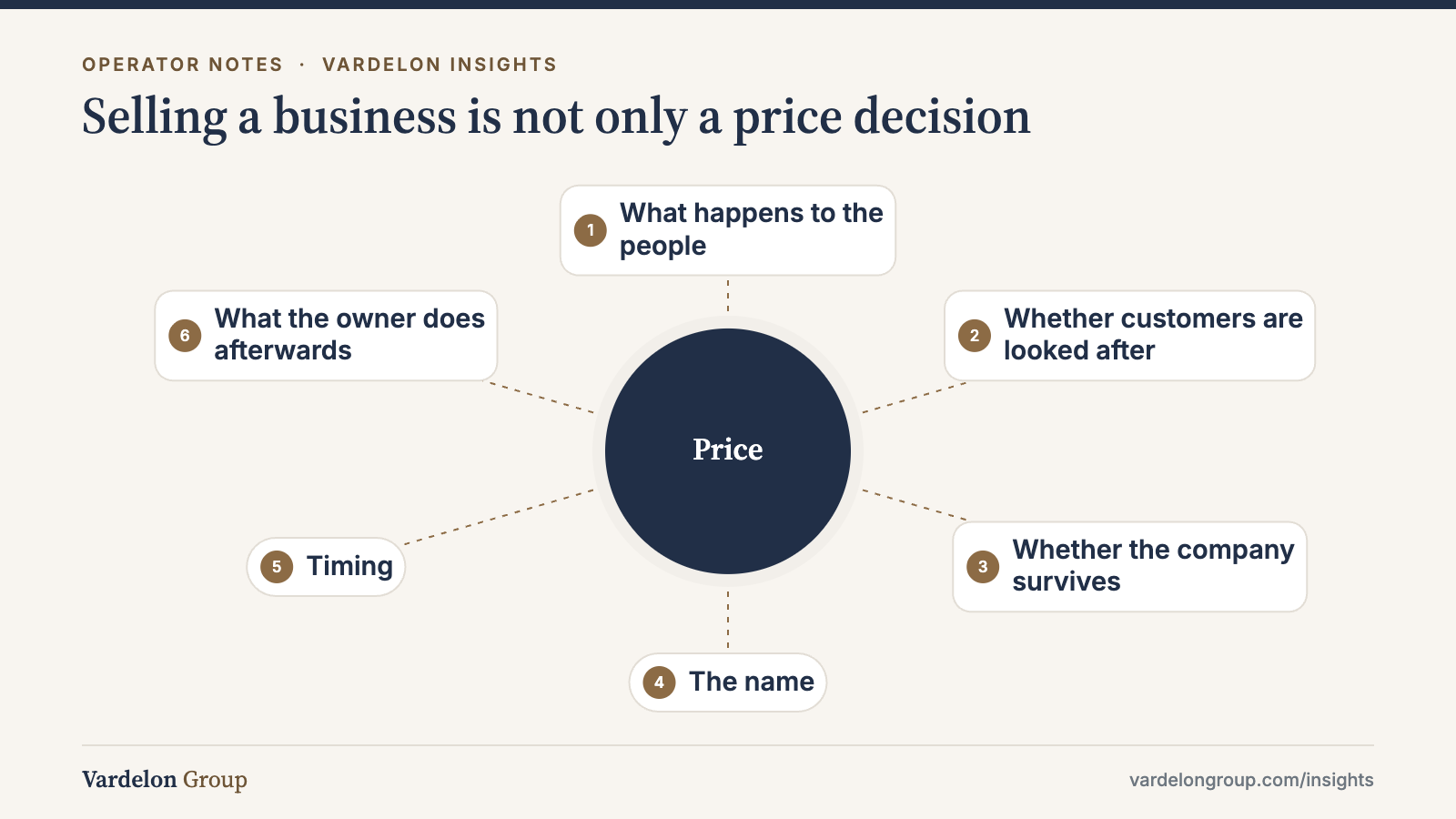
- What happens to the people. Often the first question asked and the last one answered honestly.
- Whether customers will still be looked after. Reputation does not end at completion.
- Whether the company survives as a company. A trade buyer may rationally absorb it. That is a legitimate outcome and an entirely different one.
- The name. Sometimes it is the family’s.
- Timing. Health, energy and family circumstances set the clock more often than market conditions do.
- What the owner does afterwards. An underestimated variable, and a common reason processes stall late.
Why price and these trade against each other
The highest offer frequently comes from the buyer with the clearest plan to change the business. That is not cynicism; it is arithmetic. A buyer who intends to consolidate overheads and absorb the customer base can pay more than one who intends to keep the company intact, because they expect to remove costs.
So an owner choosing continuity is usually choosing it against something. Being explicit about that in advance makes the process shorter and less painful than discovering it at the end.
The most useful preparation
Decide the order before starting. Continuity for staff, survival of the brand, a role afterwards, speed, certainty, price — ranked honestly, for yourself, not for a buyer.
Owners who have done this run better processes. They ask sharper questions, they recognise the wrong counterparty sooner, and they are far less likely to accept something they will regret.
Selling a company is more than a financial transaction. For many founders it represents decades of work, relationships and personal reputation.