The Economics of Cross-Selling in Hospitality
Cross-selling is a single line in an acquisition model and a multi-year operational programme in reality.
Company A has 300 customers. Company B has 200. The model says: sell B’s products to A’s customers. Then execution begins.
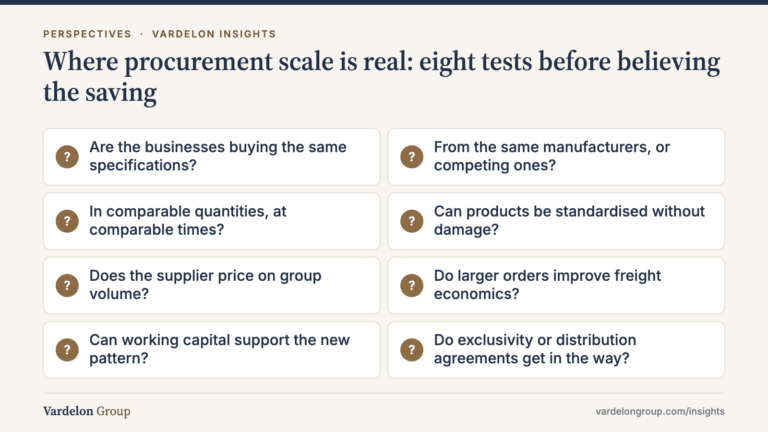
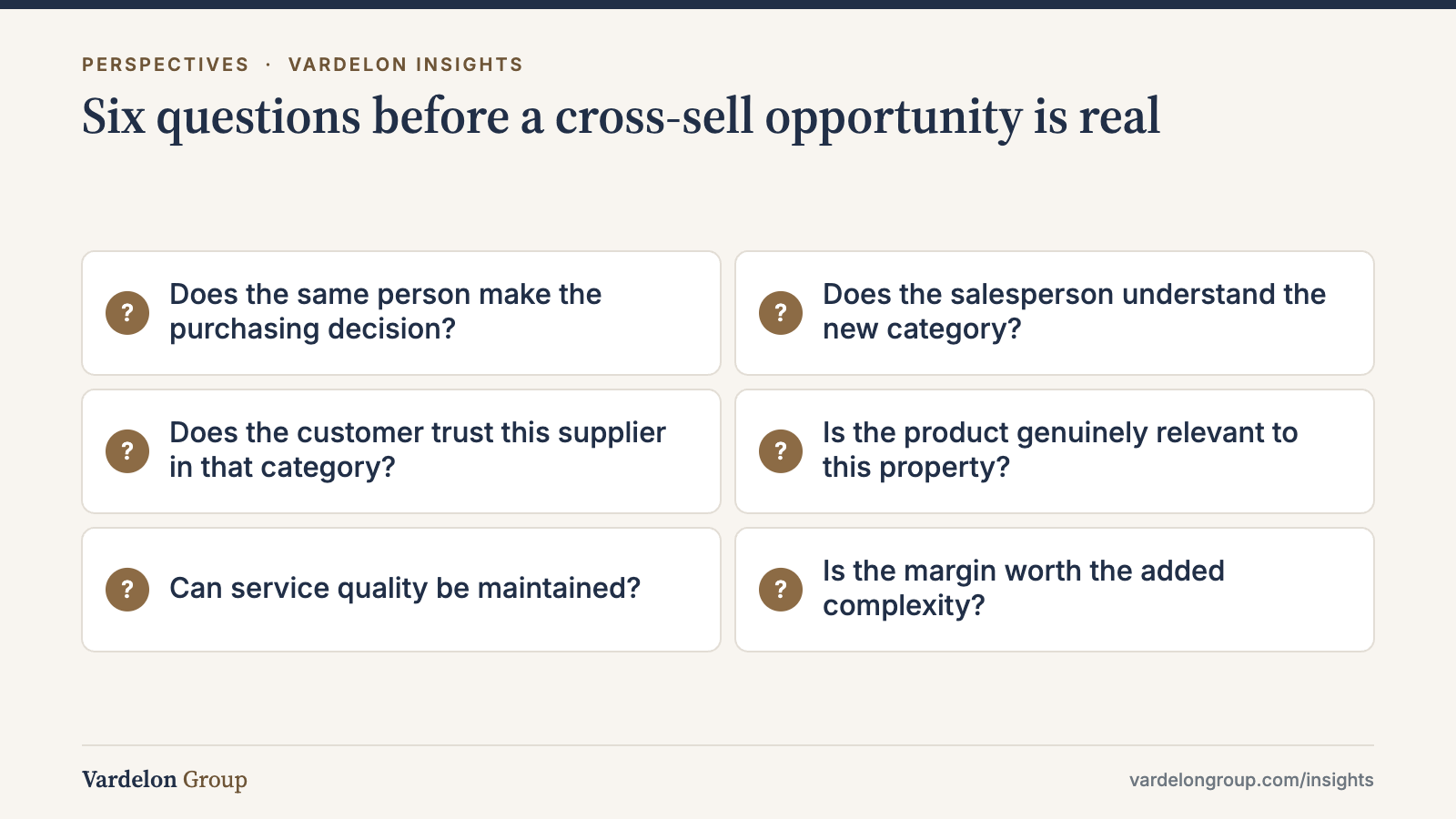
The questions execution asks
- Does the same person make the purchasing decision for both categories?
- Does the salesperson understand the new category well enough to be credible in front of a technical buyer?
- Does the customer trust this supplier in that category, or only in the original one?
- Is the product genuinely relevant to this property, or merely available?
- Can service quality be maintained at the standard that created the relationship?
- Is the margin sufficient to justify the operational complexity?
- Does the sales incentive support it, or quietly work against it?
- Can the organisation deliver what the salesperson promises?
A no to any of these does not make cross-selling impossible. It does make it slower and less valuable than the model assumed.
The three conditions
In our experience the strongest situations share three characteristics.
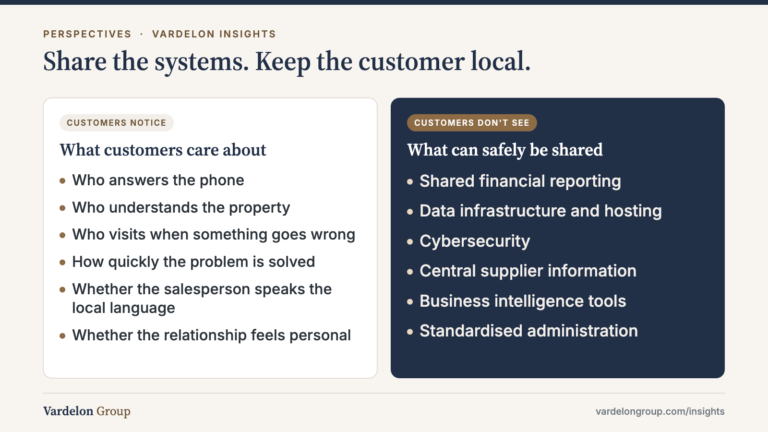
The customer already trusts the supplier. Cross-selling borrows credibility from an existing relationship. Without that, it is simply cold selling with extra steps.
The additional product solves a real adjacent need. Adjacency has to exist in the customer’s operation, not only in the supplier’s catalogue.
The organisation can deliver it reliably. A failed cross-sell does not just lose the new category. It puts the original relationship at risk, which is a much more expensive outcome than never having tried.
Why it still matters
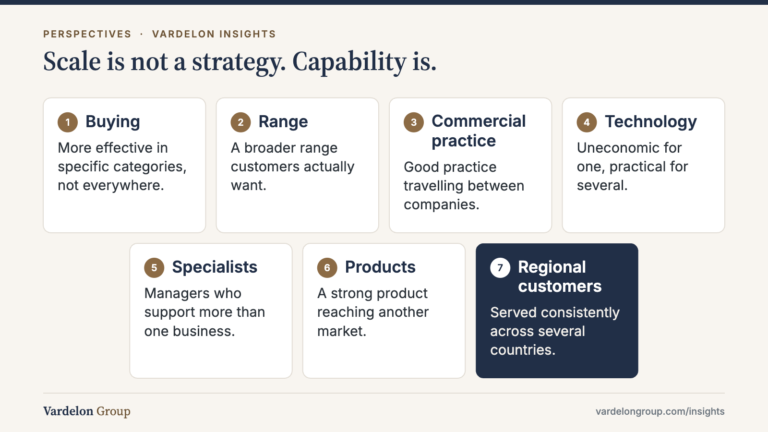
Despite the difficulty, this is where the most interesting value in connected distribution businesses sits — on the revenue side rather than the cost side.
A product proven in one market can reach another through an organisation the customer already trusts, without either company building distribution from nothing. That is a genuinely different economic proposition from buying two companies and reporting them together.
A strong customer relationship does not guarantee the next sale. It gives you permission to earn it.