What a Founder Should Ask Before Selling to a Group
Most founders spend months preparing for the questions a buyer will ask. Far fewer prepare the questions they should be asking the buyer.
That asymmetry is understandable. The buyer arrives with a process, advisers and a checklist. The founder arrives with a business they have built over twenty or thirty years and, usually, no experience of selling one. But the answers to a handful of questions say more about life after closing than any headline price.
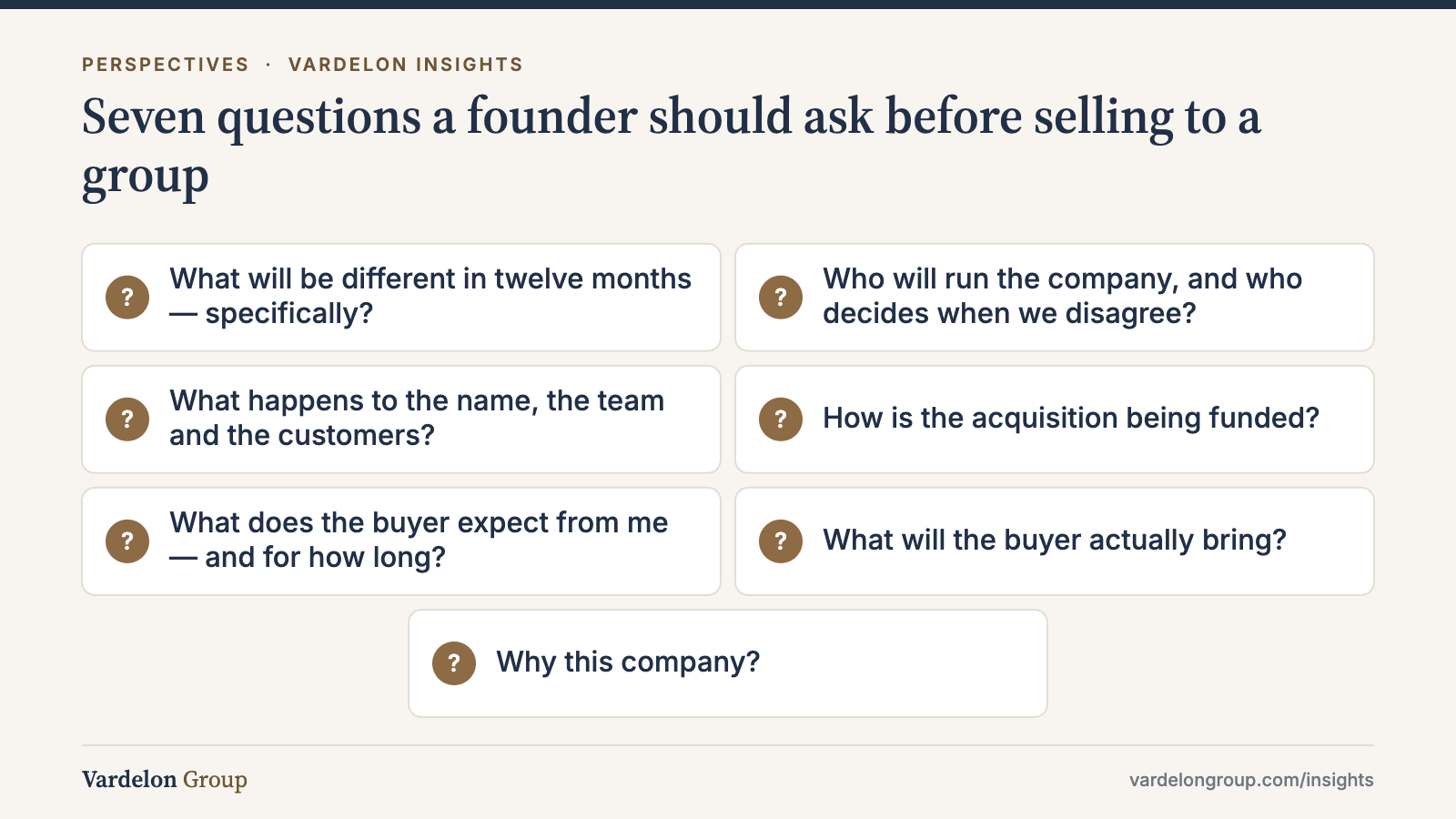
1. What will be different in twelve months — specifically?
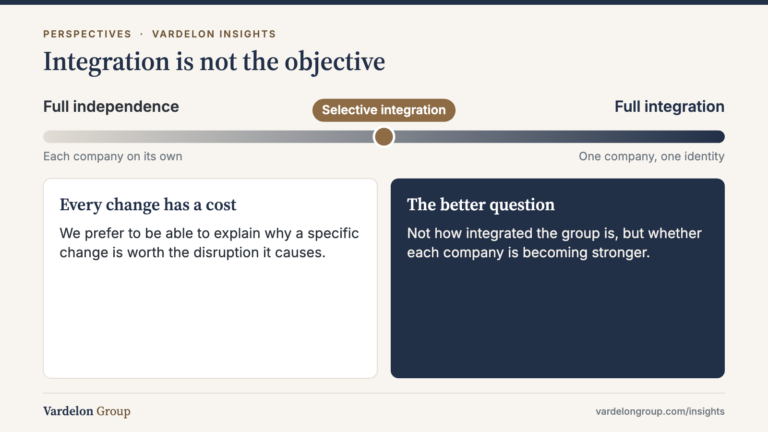
“Nothing will change” is not an answer; it is a warning. Every new owner changes something, and a serious one can name it: reporting, purchasing, banking, certain systems. A buyer who can describe the first year precisely has thought about the business. A buyer who cannot will decide later, under pressure.
2. Who will run the company — and who decides when we disagree?
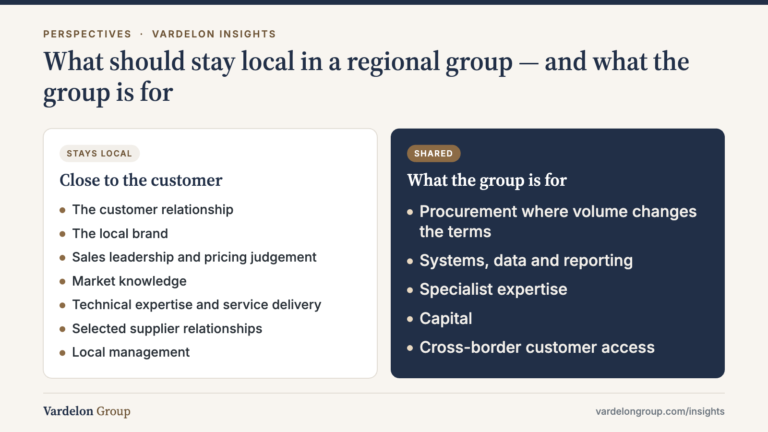
Ask where decisions sit on pricing, hiring, investment and key customers. Ask what happens when the founder and the new owner see a question differently. Autonomy that is promised but not defined tends to disappear at the first difficult quarter.
3. What happens to the name, the team and the customers?
In many hospitality supply businesses the brand and the salespeople are the customer relationship. If the plan is to keep them, the buyer should be able to say why. If the plan is to fold them into something larger, it is better to know now.
4. How is the acquisition being funded?
A founder is entitled to understand where the money comes from and how much debt the company itself will carry afterwards. A business that has been run conservatively for decades can be put under real strain by a financing structure it did not choose.
5. What does the buyer expect from me personally — and for how long?
Transition periods, earn-outs and retained stakes each imply a different life for the next few years. The right answer depends on the founder; the wrong outcome is discovering the expectation after signing.
6. What will the buyer actually bring?
Capital alone is rarely what a mature company lacks. The more useful question is which capabilities — purchasing, systems, access to neighbouring markets, management depth — the new owner will contribute, and how.
7. Why this company?
The best buyers can explain what they see in the business that makes it worth owning for the long term. If the answer is mostly about the market, the size or the multiple, the company may be interchangeable in the buyer’s eyes — and will be treated that way.
The underlying point
A sale is not only a price. It is a decision about who will look after something the founder built, and on what terms. The questions above do not guarantee a good outcome, but they make a poor one much easier to see in advance.
Founders considering the future of their business are welcome to start that conversation with us confidentially. More on how we work with owners →