Integration Is Not the Objective
Integration is frequently used as a measure of acquisition success. We think that confuses the activity with the objective.
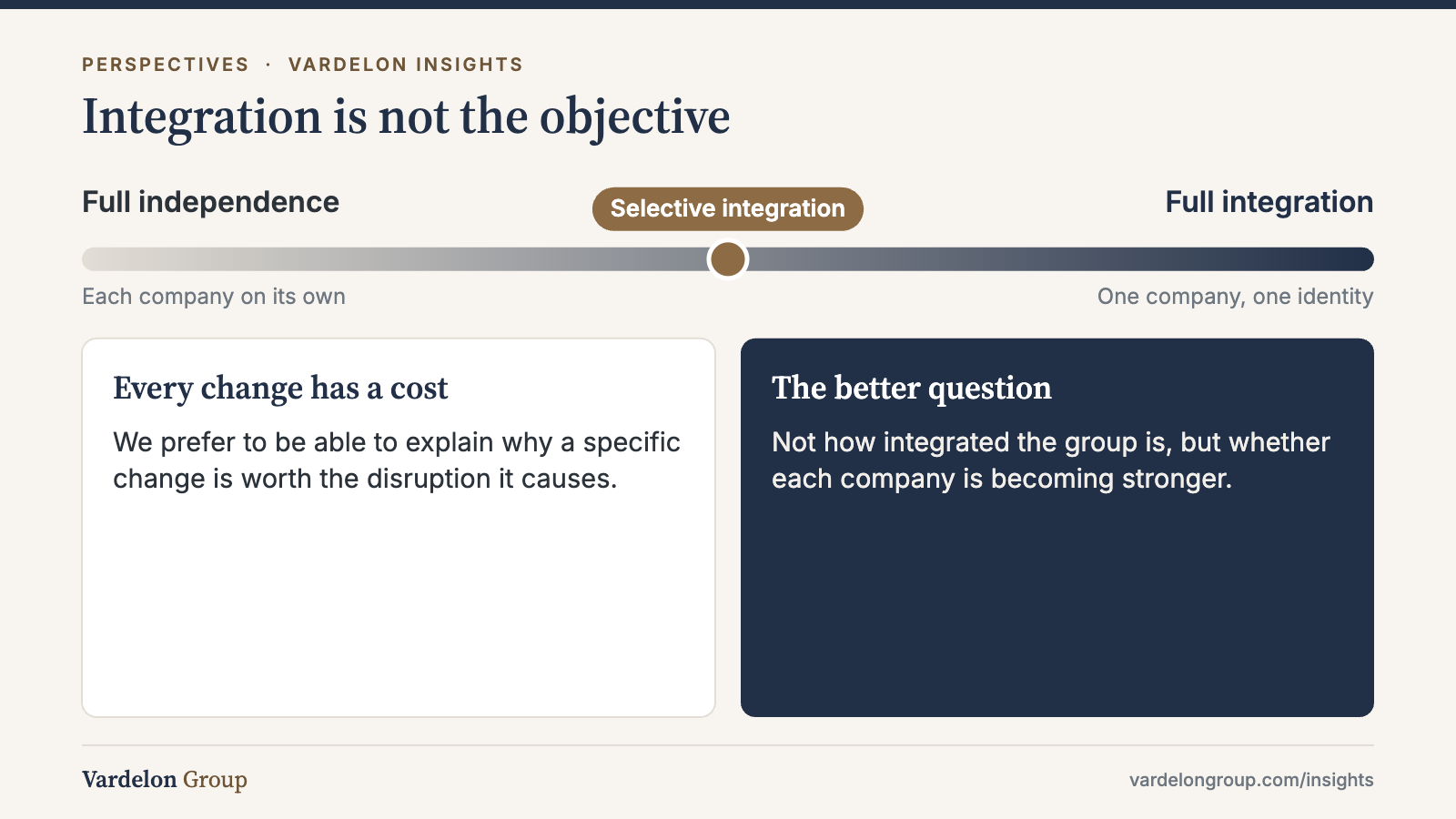
The objective is not integration. The objective is a better business. Sometimes achieving that requires substantial integration. Sometimes it requires remarkably little.
When deeper combination makes sense
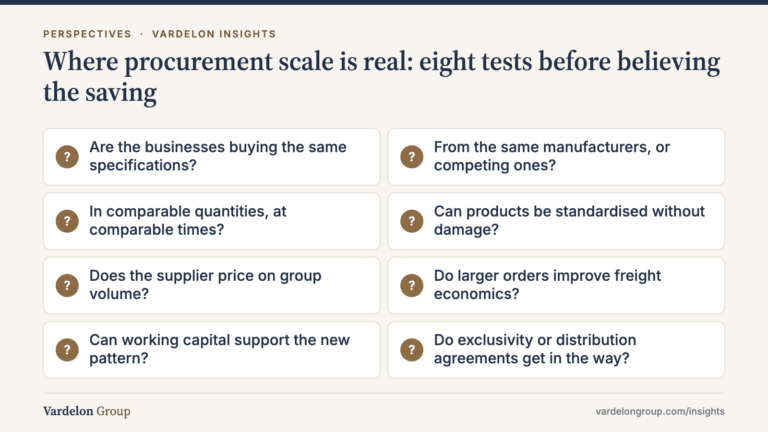
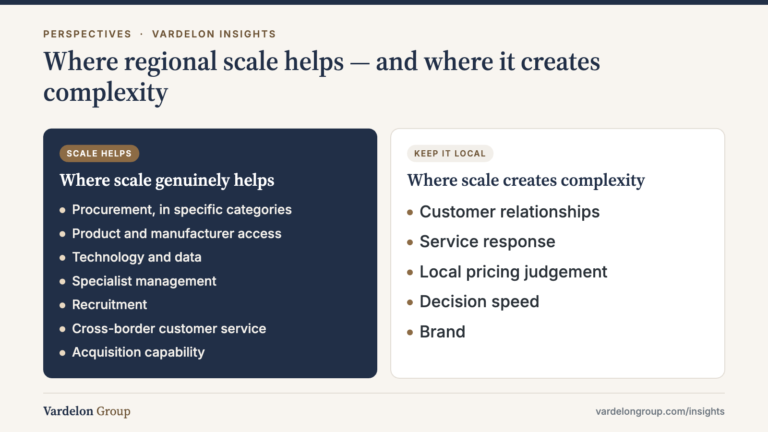
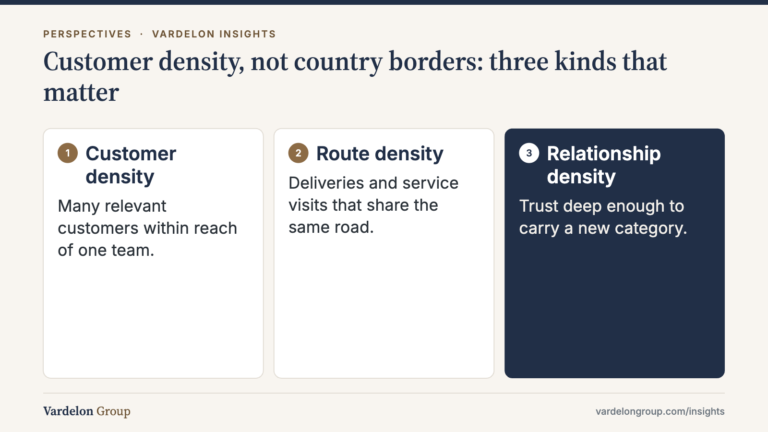
Where two businesses share customers, suppliers and operating processes, a deeper combination can genuinely create value: duplicated effort disappears, purchasing consolidates, and the customer experiences one organisation instead of two.
When it does not
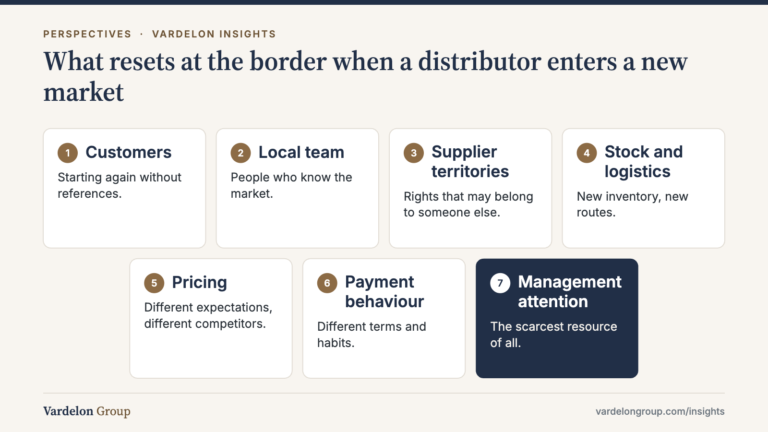
Where their local brands, teams and commercial models are each strong in their own market, forcing them together tends to create more disruption than advantage. The costs are immediate and certain; the benefits are delayed and speculative.
A better question
Not how quickly can we integrate this company? but which specific changes create enough value to justify the disruption they cause?
That produces a very different plan. Finance and reporting may change quickly. Purchasing may be coordinated. Certain products may be shared. But the brand may remain untouched, the sales team may stay exactly as it is, management may continue to run the business, and customers may barely notice that ownership changed.
Selective integration is a skill
It is harder than full integration, because every decision has to be argued rather than applied. It is also harder than doing nothing, which is the failure mode at the other extreme.
Decentralisation should not become an excuse for avoiding difficult work. A weak system should not survive because it is local. Poor reporting should not be preserved because it is familiar. Management problems should not be ignored in the name of autonomy.
The principle is not do not change anything. It is understand why you are changing it.
The cost side of every change
Every integration decision consumes management attention, unsettles staff and carries execution risk. Those costs are real even when they are not booked. A change that produces a modest benefit and absorbs a year of senior focus is not obviously a good trade.
Good operators should be able to explain, for each change, why the benefit is worth paying for. More on how we approach this →