Hospitality Infrastructure Is Bigger Than Hotel Supplies
When people hear hotel supply they think amenities and towels. The operating layer behind a hotel spans twenty categories that mostly serve the same customers.

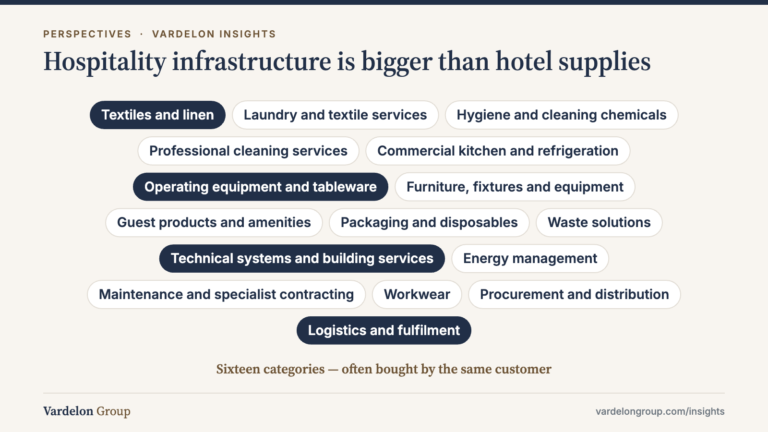
When people hear hotel supply they think amenities and towels. The operating layer behind a hotel spans twenty categories that mostly serve the same customers.
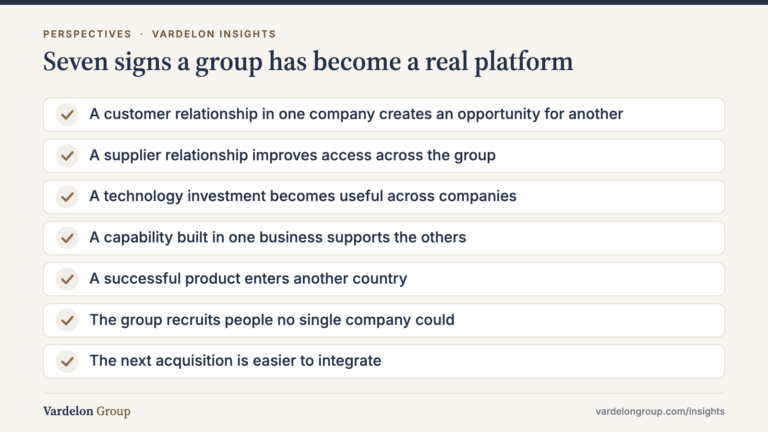
A holding company is not automatically a platform. The point at which connected businesses start producing capabilities none of them had alone.
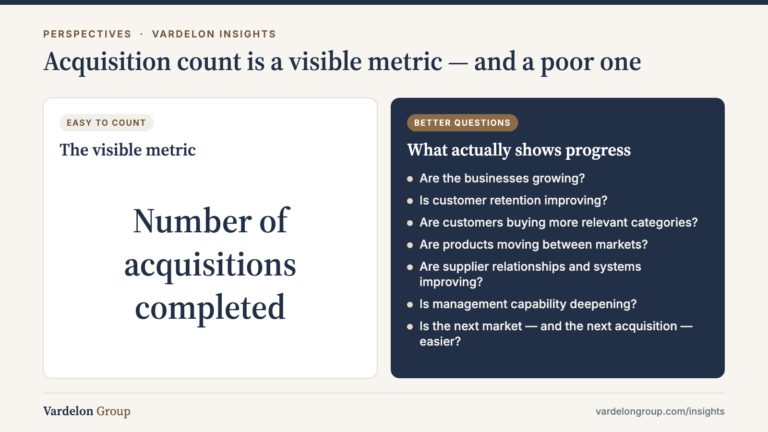
Transaction count is visible and easy to report. It says little about whether a buy-and-build strategy is working. A better set of questions for measuring platform quality.
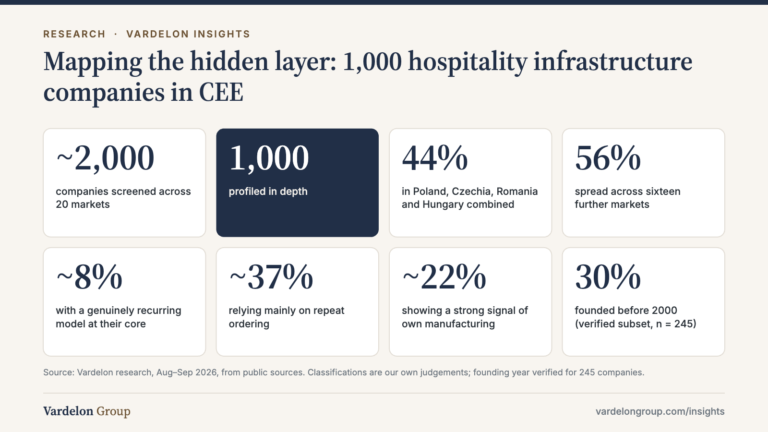
We screened around 2,000 companies behind hotels in Central and Eastern Europe and profiled 1,000 in depth. What the aggregate shows about fragmentation, recurring revenue, technical depth and company age.
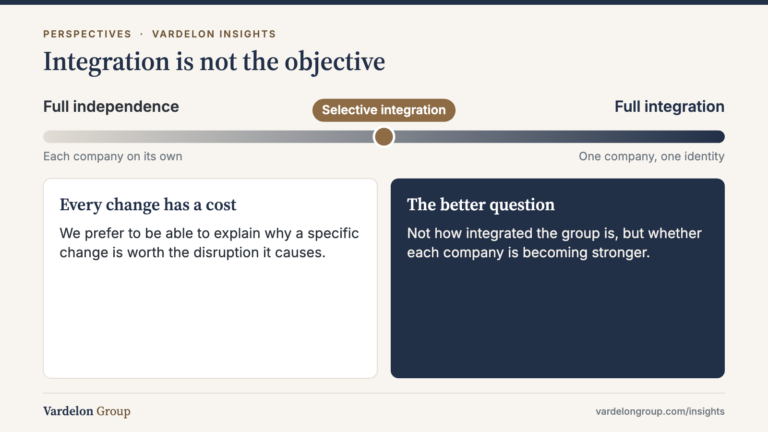
Integration is treated as a measure of acquisition success. It should not be. The objective is a better business, and that sometimes requires surprisingly little integration.
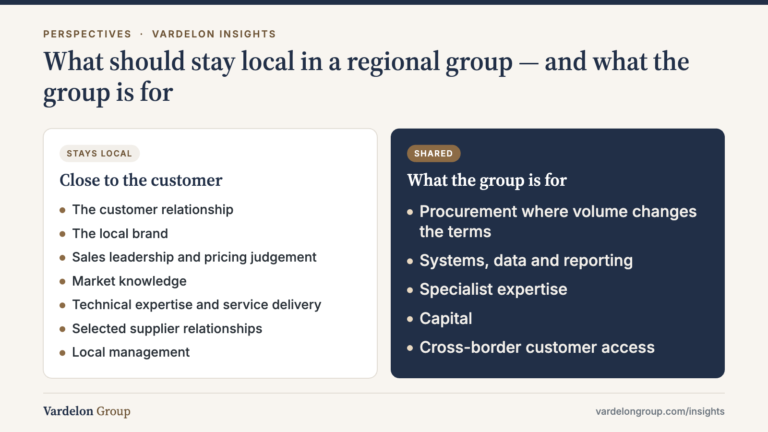
Before asking what can be centralised, ask what should stay local. The capabilities that usually belong close to the customer, and why decentralisation can be an advantage.
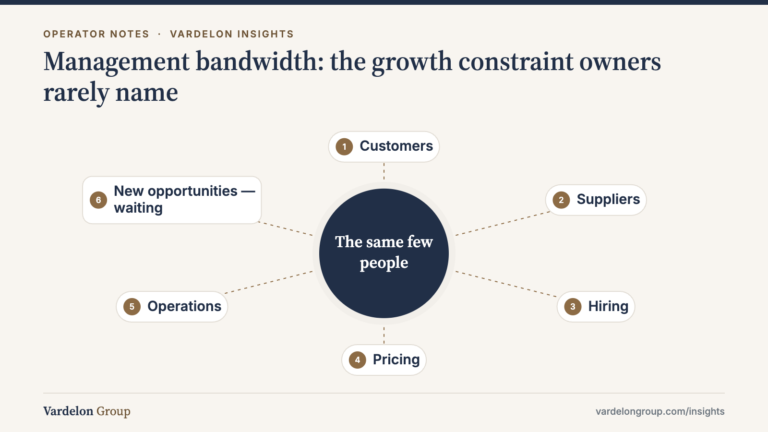
The least visible limit on a founder-led business is senior attention. Why good companies stay smaller than their market, and what a broader group can actually supply.
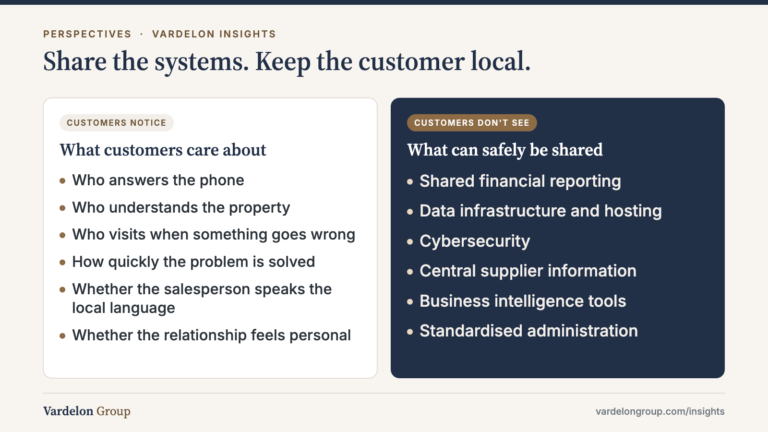
A practical way to design a group of B2B companies: divide capabilities into what the customer cares about being close, and what they do not care where you do.
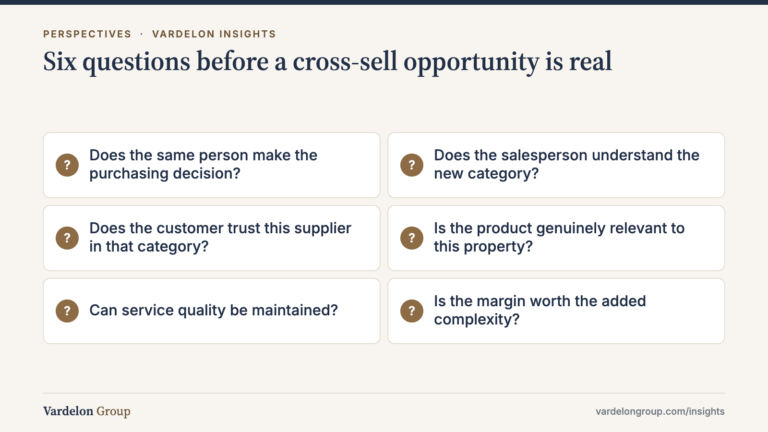
Cross-selling looks simple in a spreadsheet and is difficult in practice. The three conditions under which it works in hospitality distribution.
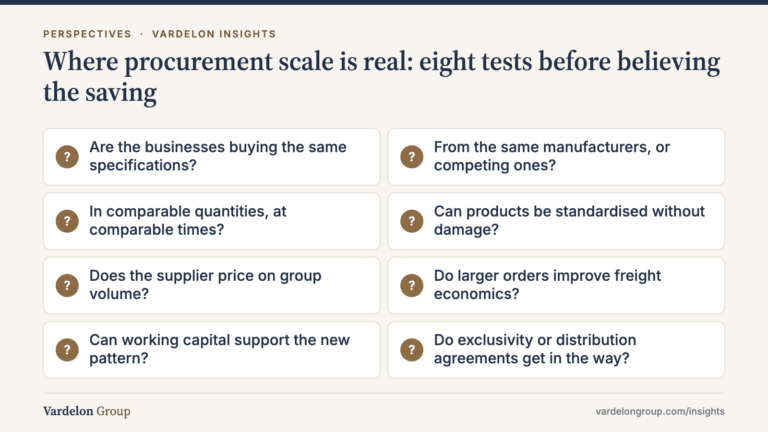
Combined purchasing volume does not automatically improve terms. The conditions under which procurement synergy is real, and how to test it before assuming it.