The Installed Base: Where the Annuity Lives
The most valuable thing a supplier owns is often the equipment already sitting in its customers’ buildings.
A dishwasher, a dosing system, a coffee machine, a laundry press. Each is sold once and then generates revenue for the next decade: chemicals, spares, service visits, consumables, and eventually a replacement.
That stream is the installed base, and in several hospitality infrastructure categories it is where most of the economic value actually sits.
Why the initial sale is often the least profitable part
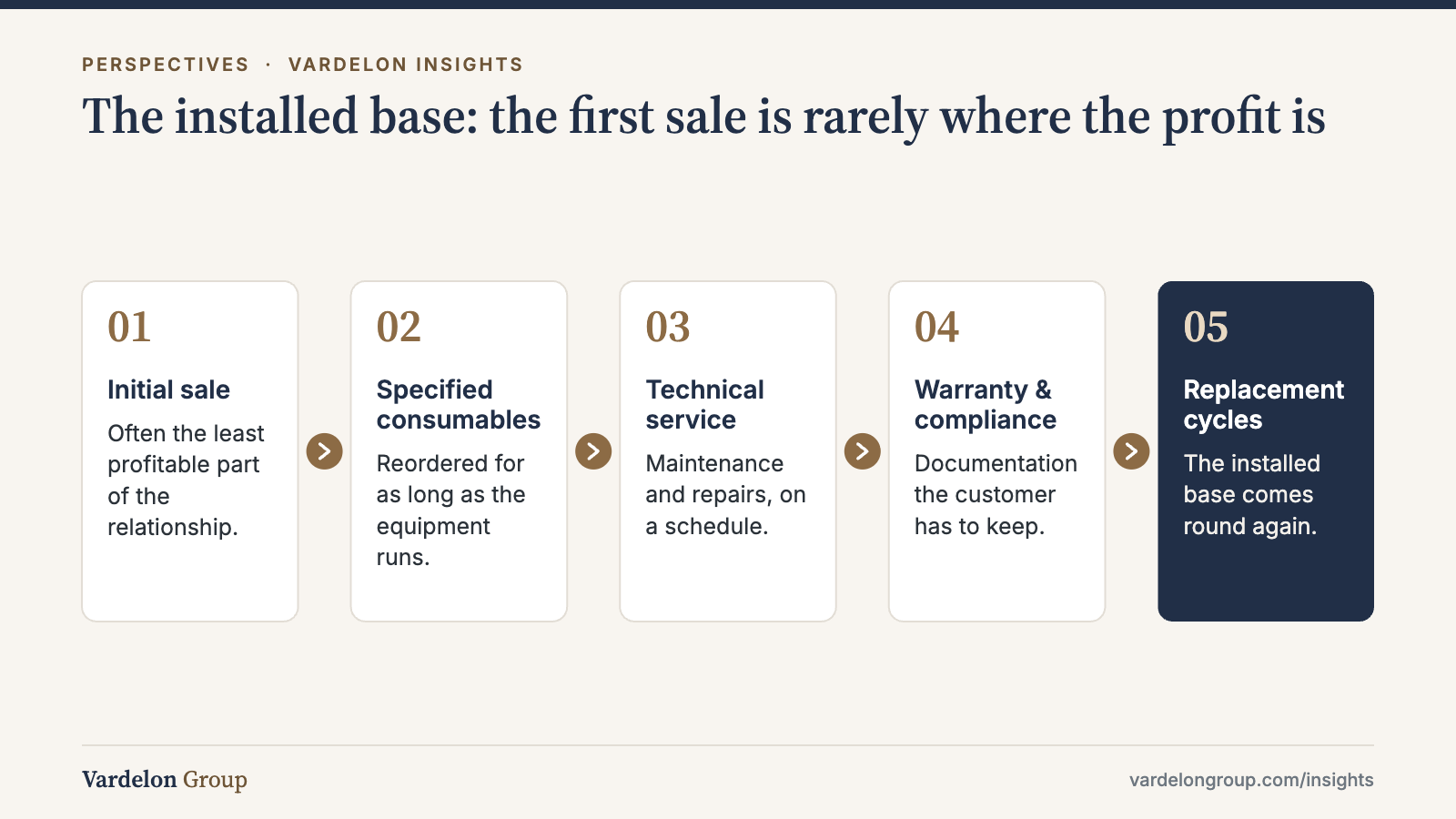
Equipment sales are competitive, tendered and price-transparent. Margins are frequently thin, and in some categories the machine is close to a loss leader.
What follows is different. The consumables are specified. The service is contracted or de facto exclusive. The spares come from one source. And the customer, having trained staff on this system, is not looking for reasons to change it.
What makes an installed base durable
- Specified consumables. Where the machine is designed around a particular chemical or cartridge, the annuity is structural rather than habitual.
- Technical service. If only this supplier’s engineers know the configuration, the relationship survives price pressure.
- Warranty and compliance. Obligations that make switching feel risky as well as inconvenient.
- Replacement cycles. Equipment approaching end of life gives the incumbent the first and best conversation.
How it should be measured
Most suppliers do not know their own installed base with any precision, which is a striking gap given how much of their future revenue it represents.
The useful questions are simple: how many units are in the field, at which properties, of what age, on what service arrangement, and consuming what per year. A business that can answer these is materially easier to value than one that cannot.
The risk that hides inside it
An installed base is an annuity until it isn’t. Two things end it. The first is a replacement cycle lost to a competitor, which forfeits ten years of downstream revenue in a single decision. The second is a manufacturer changing its distribution arrangements, which can strand the consumable and service stream regardless of how good the customer relationship is.
That second risk connects directly to manufacturer relationships, and it is why the two need to be assessed together rather than separately.
Why it matters for regional scale
Installed base is intensely local — the equipment is in a building, and the engineer has to reach it. But the capabilities that protect it are not. Better data on what is installed where, better spares availability, better technical training, and better replacement-cycle planning all improve with scale.
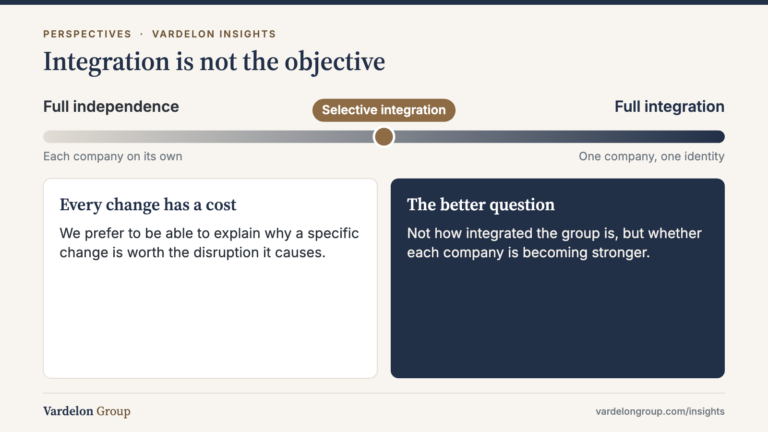
That is the pattern we keep returning to: the customer-facing layer stays where it is, and the group makes it more capable behind the scenes. Related: Shared systems, local customers →