What Should Stay Local in a Regional Group
Before asking what can be centralised, ask what should stay local. The capabilities that usually belong close to the customer, and why decentralisation can be an advantage.

Longer analytical essays developing the Vardelon point of view.
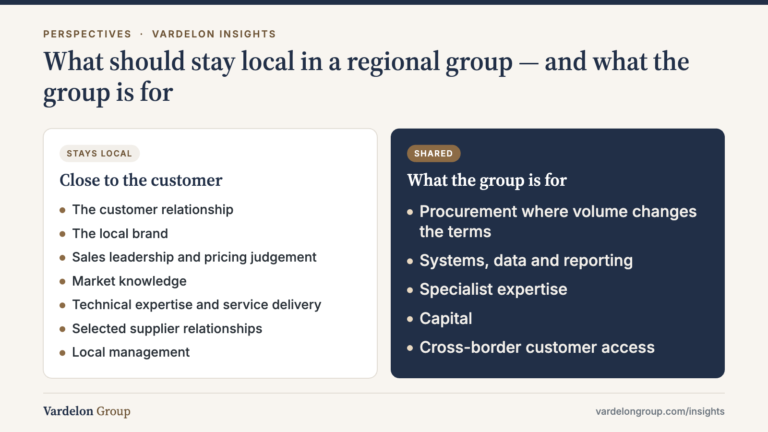
Before asking what can be centralised, ask what should stay local. The capabilities that usually belong close to the customer, and why decentralisation can be an advantage.
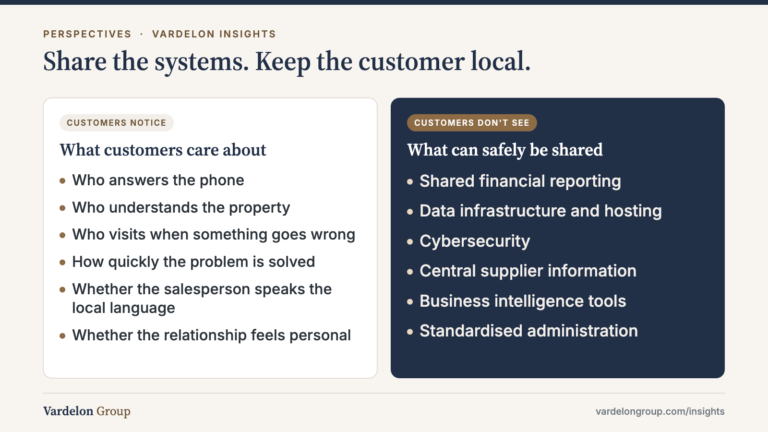
A practical way to design a group of B2B companies: divide capabilities into what the customer cares about being close, and what they do not care where you do.
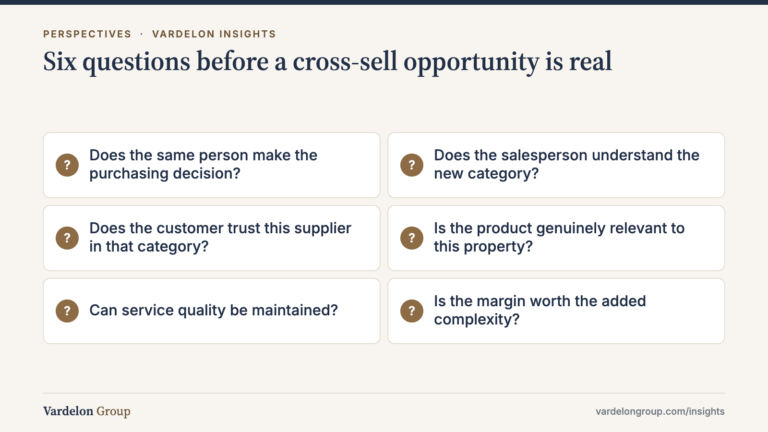
Cross-selling looks simple in a spreadsheet and is difficult in practice. The three conditions under which it works in hospitality distribution.
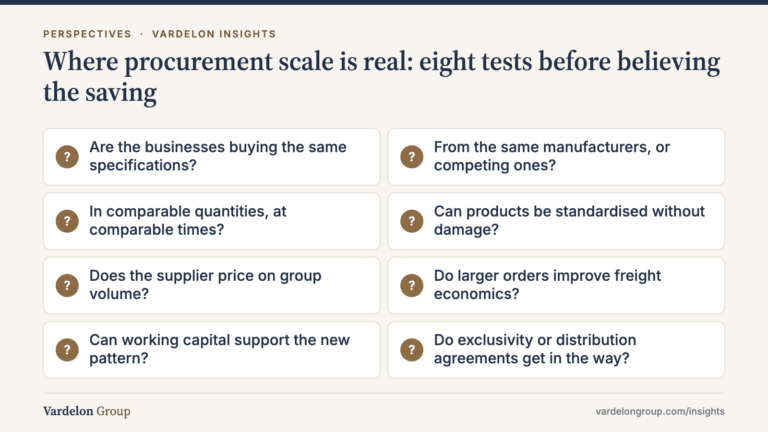
Combined purchasing volume does not automatically improve terms. The conditions under which procurement synergy is real, and how to test it before assuming it.
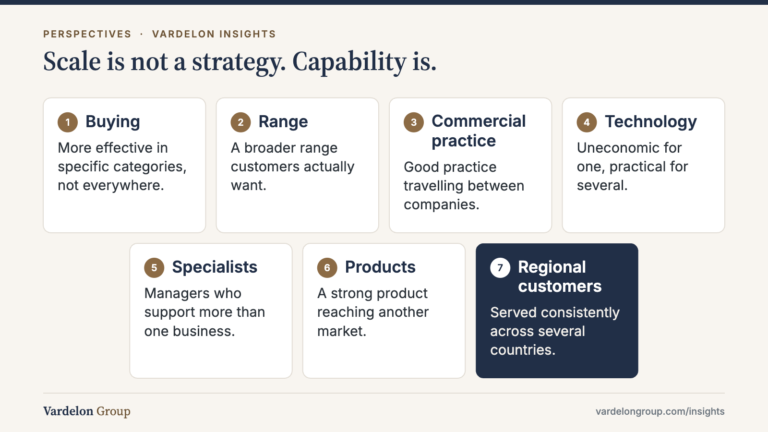
Two companies do not become better because their revenues appear on one statement. The operating questions that determine whether scale creates advantage or only complexity.
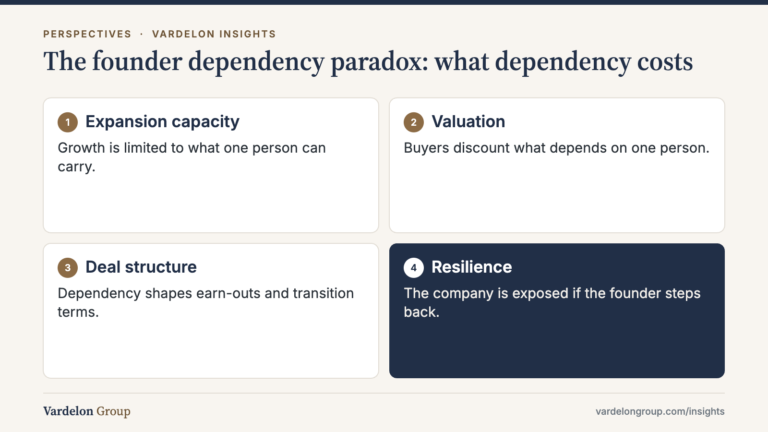
The founder is often the reason a business succeeded and the main risk to its value. How founder dependency is created, and what reduces it without weakening the company.
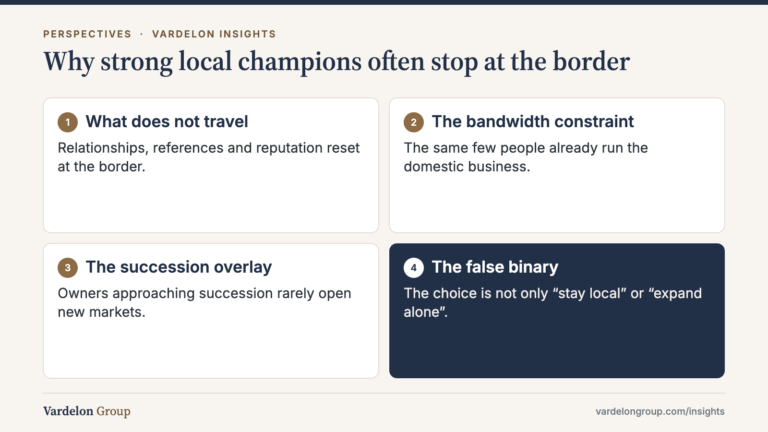
Strong domestic companies frequently stop at the border. The constraint is usually not ambition or capital, but management bandwidth and capabilities that do not travel.
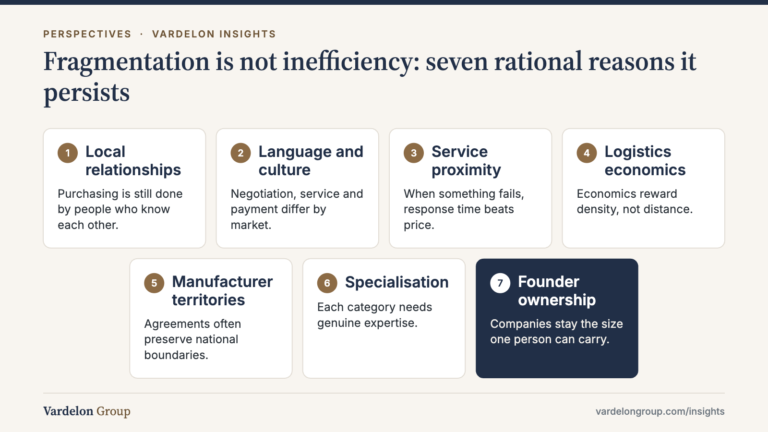
A market with no dominant player is not automatically waiting to be consolidated. Why CEE hospitality supply is fragmented for reasons that are largely rational.
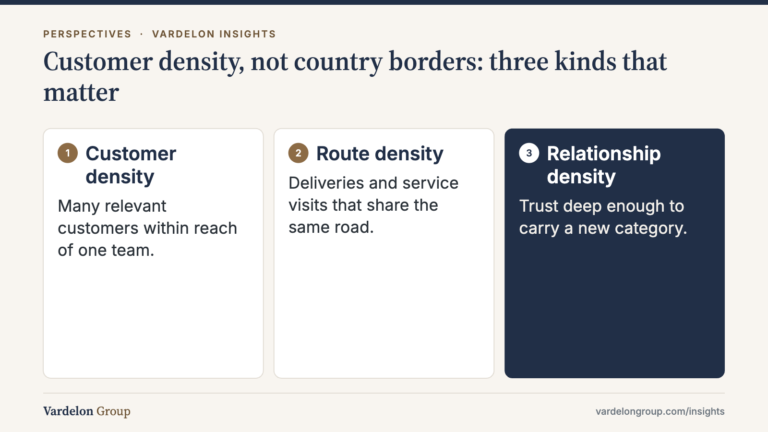
In B2B distribution, the density of trusted customer relationships is a better unit of strategy than geography. Why route density and category adjacency beat country-by-country expansion.
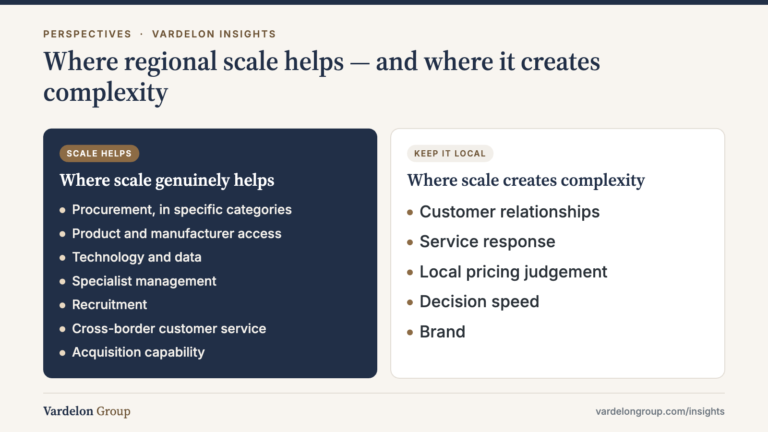
Scale only creates value where it produces capability. A capability-by-capability look at where regional scale helps hospitality suppliers, and where it only adds complexity.