Contract Renewals and the Illusion of Loyalty
A customer who has not left is not the same thing as a customer who would not leave.
Retention is the metric distribution businesses are proudest of, and the one most likely to be misread. A supplier can show ninety-five per cent retention and still be one procurement review away from losing a third of its revenue.
Three reasons a customer stays
Because the supplier is genuinely better. Reliability, knowledge, service, product access. This is durable and survives scrutiny.
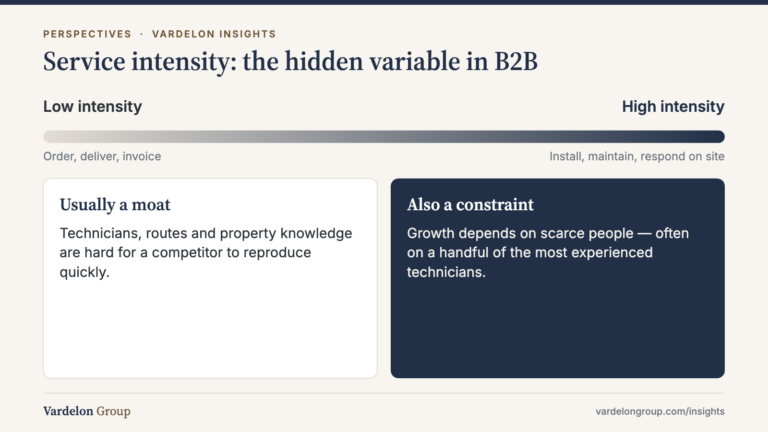
Because switching is operationally painful. Real, but only as strong as the pain. It erodes as systems standardise and as procurement professionalises.
Because nobody has looked. The relationship survives because no one has had a reason to examine it. This is not loyalty. It is latency.
All three look identical in a retention figure.
What separates them
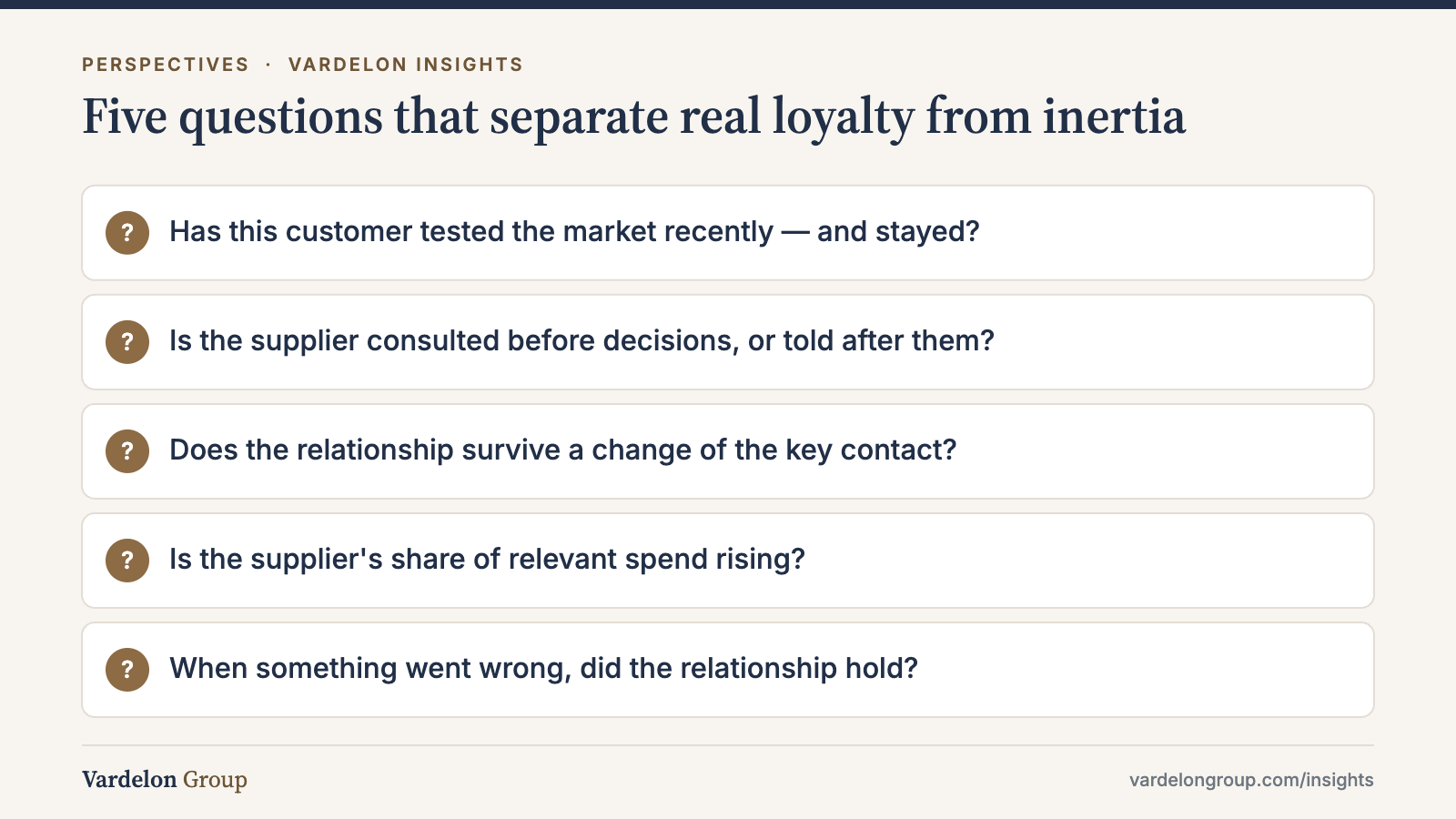
- Has this customer tested the market in the last three years, and what happened?
- Is the supplier consulted before decisions, or informed after them?
- Does the relationship survive a change of the customer’s purchasing contact?
- Is share of the customer’s relevant spend rising or flat?
- When something went wrong, did the relationship strengthen or merely survive?
That last one is the most informative. Relationships are proven in failures, not in uneventful years.
The moments that expose latency
Three events reliably surface the difference: a change of ownership at the property, a new general manager or F&B director, and the introduction of a group procurement function.
Each replaces the person who inherited the supplier with someone who has no history with them and an incentive to demonstrate value. A relationship held together by inertia rarely survives all three.
What to do about it
Not to defend harder, but to rebuild the reason. Deepen the relationship below the main contact so it does not depend on one person. Increase category penetration so leaving costs more. Make sure the value delivered is visible to the people who will eventually review it.
And be honest internally about which customers are which. A business that knows it has thirty per cent latent revenue can act. One that believes it has ninety-five per cent loyalty will be surprised.
Why an acquirer should care
This is one of the most important things diligence tends to under-examine. Revenue quality is not just concentration and margin; it is why each relationship exists. Related: What makes a supplier difficult to replace →